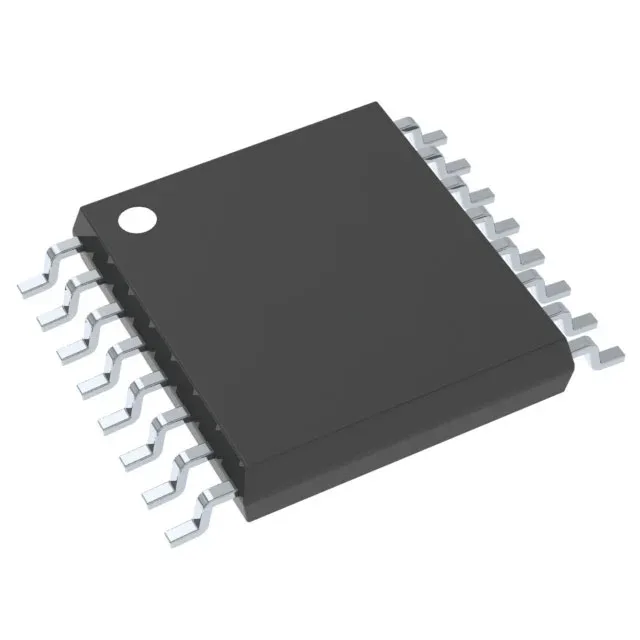
Texas Instruments SN74LV165APWRG3 — Logic ICs

SN74LV165APWRG3 8-bit shift register, 2V-5.5V, 16-TSSOP

MPNSN74LV165APWRG3
End of Life

Texas Instruments 74LV series SN74LV165APWRG3, 8-bit parallel-to-serial shift register, 2V to 5.5V supply, complementary output, -40°C to 125°C, 16-TSSOP surface mount.

$0.97Ref. price · indicative, final on quote
Packaging16-TSSOP (0.173", 4.40mm Width)
RoHSROHS3 Compliant
Series74LV
Independent supplier — new & surplus stockAuthenticity-screened · ESD-safe packingListing updated Aug 2026

Specifications

SN74LV165APWRG3 specifications
ParameterValue
Series74LV
Logic typeShift Register
Output typeComplementary
MountingSurface Mount
Supply voltage2V ~ 5.5V
Operating temperature-40°C ~ 125°C
PackageTape & Reel (TR); Cut Tape (CT)
FunctionParallel or Serial to Serial
Case16-TSSOP (0.173\", 4.40mm Width)
Number of elements1
Number of bits per element8

Product details

8-bit parallel-to-serial shift register for input expansion

The Texas Instruments SN74LV165APWRG3 is an 8-bit parallel-to-serial shift register from the 74LV low-voltage logic family. It accepts eight parallel inputs and shifts them out serially on a single data line, controlled by a shift/load input and a clock. The complementary outputs give you both true and inverted serial data without extra inversion logic.

Package and footprint — 16-TSSOP

Frequently asked questions

What is the function of SN74LV165APWRG3?

It is an 8-bit parallel-to-serial shift register. It reads eight parallel inputs and shifts the data out serially on one line, controlled by a shift/load input and a clock. The complementary outputs give both true and inverted serial data.

What is the difference between SN74LV165APWRG3 and SN74HC165?

Both are 8-bit parallel-to-serial shift registers with the same pinout and function. The LV version operates down to 2V supply and has lower dynamic power at 3.3V, while the HC version is specified for 2V to 6V and draws slightly higher supply current at the same frequency. For a 3.3V-only design the LV part is the lower-power pick; for a 5V rail the HC part is equally valid and may be cheaper on spot.