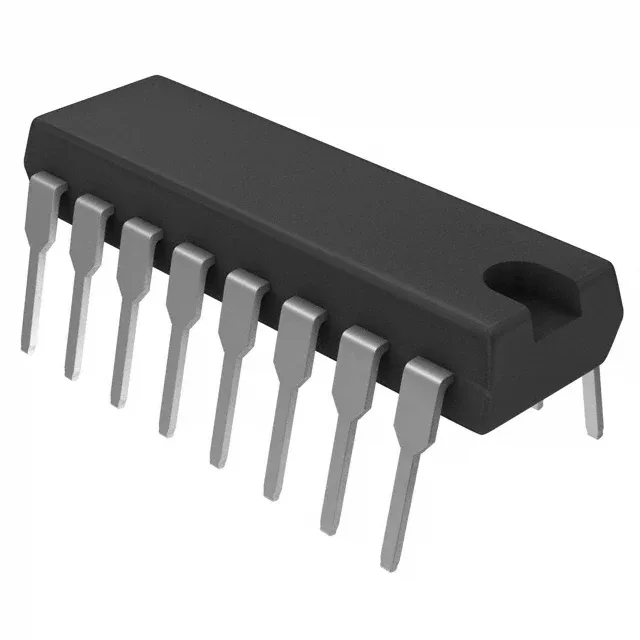
Dual VCO at 20 MHz — what the frequency rating means for your loop
The SN74LS629N is a dual voltage-controlled oscillator from the 74LS Schottky family, rated for a maximum oscillation frequency of 20 MHz. In a phase-locked loop or clock-recovery circuit, the VCO's centre frequency is set by an external capacitor and the control voltage — the 20 MHz ceiling defines the upper bound of the capture range, not the free-run frequency you design to. For a PLL locking to a 10 MHz reference, the VCO tunes across a band that includes that frequency with margin; the 20 MHz limit means this part suits sub-20 MHz clock generation and frequency synthesis, not high-speed serial links.
5 V rail and 0–70 °C — the operating envelope for commercial systems
If your system bus is 5 V with a ±10 % regulator, the VCO drops out of spec below 4.75 V; budget a 5 V ±5 % rail or a post-regulator LDO. Supply current is 35 mA typical for both VCO sections running. This is the current drawn from the 5 V rail, not the output drive — the VCO outputs are 74LS-compatible and sink or source a few mA per channel. The 35 mA figure goes into the system power budget as a constant load independent of output frequency.
ROHS3 and compliance documentation
The SN74LS629N is ROHS3 compliant. Texas Instruments provides the standard compliance documentation — RoHS declaration, REACH SVHC statement, and material declaration — with the shipment.