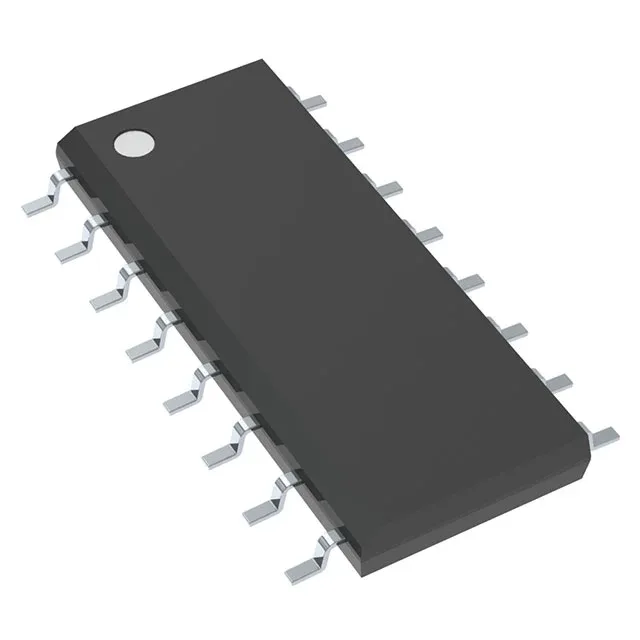
Texas Instruments SN74LS153D — Discrete Semiconductors

SN74LS153D 74LS Dual 4:1 Multiplexer, 16-SOIC, 5V Supply

MPNSN74LS153D
End of Life

Texas Instruments 74LS series, SN74LS153D, Type Multiplexer, Circuit 2 x 4:1, 16-SOIC (0.154", 3.90mm Width), Surface Mount, Single Supply 4.75V ~ 5.25V, 0°C ~ 70°C.

$1.09Ref. price · indicative, final on quote
Packaging16-SOIC (0.154", 3.90mm Width)
RoHSROHS3 Compliant
Series74LS
Independent supplier — new & surplus stockAuthenticity-screened · ESD-safe packingListing updated Aug 2026

Specifications

SN74LS153D specifications
ParameterValue
TypeMultiplexer
Series74LS
MountingSurface Mount
Supply voltage4.75V ~ 5.25V
Voltage supply sourceSingle Supply
Current - output high, low400µA, 8mA
Operating temperature0°C ~ 70°C
Circuit2 x 4:1
PackageTube
Case16-SOIC (0.154\", 3.90mm Width)
Independent circuits1

Product details

Output drive and fan-out limits

The output stage is rated for 400µA source and 8mA sink. That sink current is enough to drive a standard TTL load or a couple of LS inputs, but it will not directly drive an LED or a relay coil without a buffer. If the downstream load pulls more than 8mA low, the output voltage rises above the guaranteed VOL level and the logic-low margin disappears. Keep the fan-out to ten 74LS loads or fewer, and verify the input current of whatever comes next.

For new designs, this part is a straightforward choice if the 74LS logic family and 5V supply are already in the BOM.

Frequently asked questions

What is the difference between SN74LS153D and SN74LS153N?

The SN74LS153D is the surface-mount version in a 16-SOIC package, while the SN74LS153N is the through-hole version in a 16-pin DIP. Both are dual 4:1 multiplexers with identical logic and electrical specifications. The choice is purely a board-assembly decision — reflow versus socket or wave-solder.

What are the applications of SN74LS153D multiplexer?

This dual 4:1 multiplexer is used for data selection, signal routing, and bus multiplexing in 5V TTL systems. Typical applications include address decoding, data acquisition front-ends, and control logic in industrial controllers, test equipment, and legacy digital boards.