What this 8-bit transparent latch does on your bus
It captures eight data bits when the latch-enable (LE) input is high and holds them when LE goes low, with tri-state outputs controlled by an output-enable (OE) pin. The 74HCT series is TTL-input compatible, so it can be driven directly by 5V TTL logic without level translation.
25 ns propagation delay — timing budget reality
The 25 ns propagation delay is the time from the latch-enable edge to valid data at the outputs. In a typical 5V system clocked at 20 MHz, that delay consumes about half a clock cycle, leaving limited margin for additional bus buffering or long PCB traces. If your design runs a faster bus (e.g., 33 MHz or above), the 74HCT573's 25 ns may force you to pipeline or switch to a faster logic family like 74FCT, where the 74FCT573APC offers 8.5 ns propagation delay. For slower interfaces (8–16 MHz microcontrollers, parallel I/O expansion, or address latching for a 68K bus), 25 ns is well within budget.
6 mA output drive — what it can and cannot do
The SN74HCT573PW can source or sink 6 mA per output. That is sufficient for driving standard TTL loads, CMOS inputs, or a single LED with a series resistor. It will not drive a relay coil, a high-current bus transceiver, or a long backplane trace directly. For higher drive, consider the 74FCT573APC which provides 15 mA output current, or add a buffer stage. The 6 mA limit also means that if multiple outputs are active simultaneously, the total package dissipation stays low — no thermal derating concerns in the TSSOP-20 package at industrial temperatures.
For procurement, this removes the urgency of hunting down date-coded stock or placing LTB orders. No need to stockpile — but always confirm current lead time at quote time.
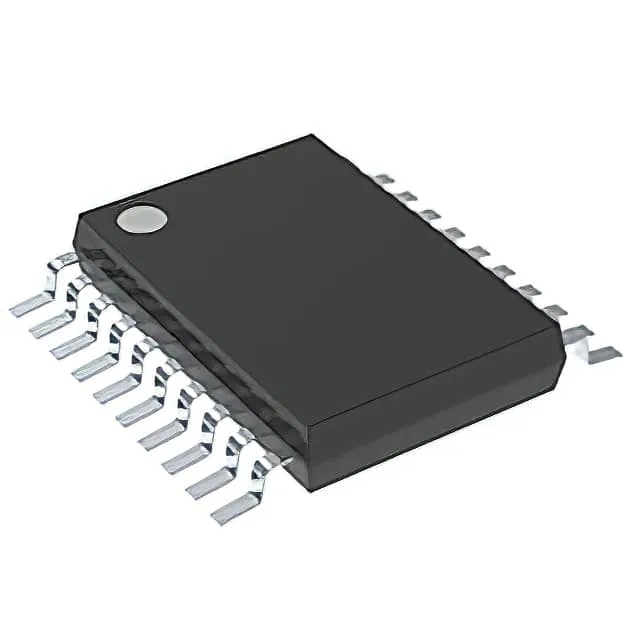
Package and footprint: 20-TSSOP
The 20-TSSOP package (4.40 mm width, 0.173" body) is a compact surface-mount footprint common on dense PCBs. No thermal pad or exposed paddle — standard JEDEC moisture sensitivity level 1 (typical for TSSOP) means no bake required before reflow if the bag seal is intact. For layout, the 0.65 mm pin pitch needs careful routing under the body; a via-in-pad is not required.