What this inverting buffer brings to the bus
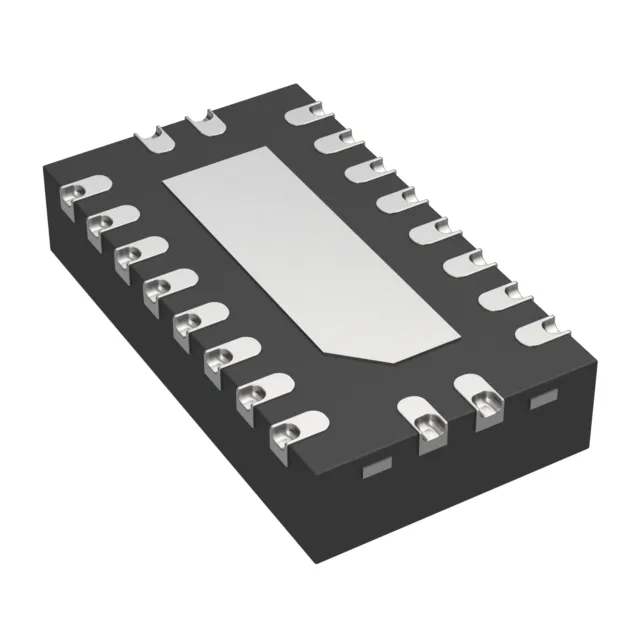
It packs two elements, each handling 4 bits, into a compact 20-VQFN (2.5x4.5) package with a wettable flank for automated optical inspection. Schmitt-trigger inputs on every channel provide noise immunity on slow or noisy signal lines, a practical advantage in automotive and industrial environments where supply rails are not pristine. The wide supply range from 2V to 6V means this single part can bridge 3.3V and 5V logic domains without an external level translator, simplifying the BOM and reducing board area.
Automotive temperature reach and what it buys you
The 7.8mA source and sink capability per output is modest but sufficient for driving CMOS logic inputs, small signal relays, or indicator LEDs through a series resistor. For bus loads requiring more drive, the 3-state output structure lets multiple devices share a common data line without contention when the output enable is deasserted.
Package and mounting: the wettable-flank advantage
The 20-VQFN with exposed pad and wettable flank is a surface-mount package that supports automated solder-joint inspection — the flank provides a visible fillet on the side of the package, eliminating the hidden-solder-joint concern that standard QFN packages present. The exposed pad underneath should be connected to a ground plane with thermal vias to aid heat dissipation, though at 7.8mA output the thermal load is light. The package footprint is 2.5x4.5 mm, fitting dense PCB layouts in automotive ECUs or industrial sensor modules.
ROHS3 compliant.