Active production, AEC-Q100 qualified — what that means for a BOM line
The SN74HCS165QWBQBRQ1: AEC-Q100 qualification (Grade 1, per the -40°C to +125°C operating range) certifies the device for under-hood and chassis-mounted automotive applications. The 125°C upper limit covers the engine-bay ambient temperature band with margin for self-heating inside the module.
Supply voltage and temperature — the fit envelope
The 2V to 6V supply range spans both 3.3V and 5V logic domains without a separate level translator. This is the same wide-VCC flexibility as the original 74HC family but with the 74HCS series' improved input hysteresis and lower quiescent current. Operating temperature from -40°C to +125°C (TA) means the shift register meets the full automotive temperature profile. The 125°C ceiling is the same as AEC-Q100 Grade 1 — the device is characterized and tested at that limit, not just rated by extrapolation.
Package and footprint — 16-WQFN with exposed pad
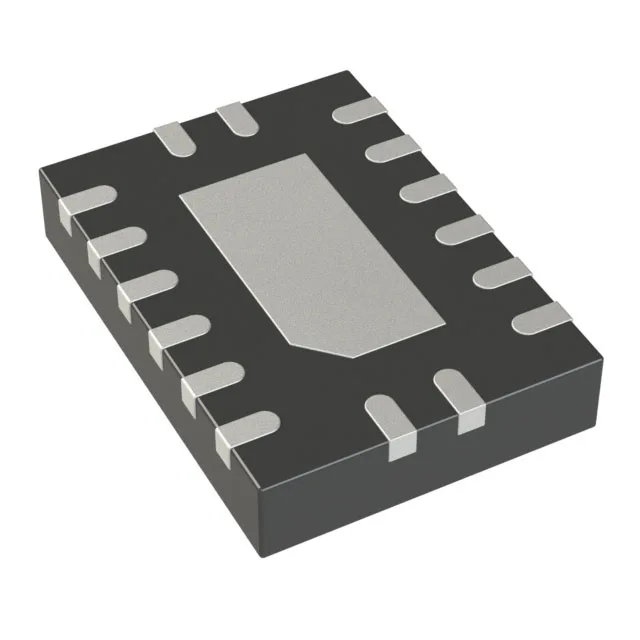
Housed in a 16-WFQFN with exposed pad (supplier package designation 16-WQFN 2.5x3.5 mm), the device requires a thermal land on the PCB. The exposed pad is the primary thermal path — the PCB copper area under the pad sets the junction-to-ambient thermal resistance, not the package body. Surface-mount assembly with the 0.50 mm pitch QFN footprint. The small 2.5x3.5 mm body saves board area compared to a 16-SOIC or 16-TSSOP, at the cost of a more demanding solder-paste stencil aperture for the center pad.
Function and output — parallel-load shift register with push-pull
The SN74HCS165QWBQBRQ1 accepts parallel or serial input data and shifts it out serially. The 8-bit parallel load captures a byte-wide bus in one clock cycle — useful for reading DIP switches, keypads, or sensor arrays over a two-wire SPI-like interface. Push-pull outputs eliminate the need for external pull-up resistors on the serial data line. The output drives rail-to-rail, which improves noise margin in the long PCB traces typical of automotive harness connections.