SN74HC595DWR
Texas Instruments · 74HC Series
IC 8BIT SHIFT REG 3ST-OUT 16SOIC
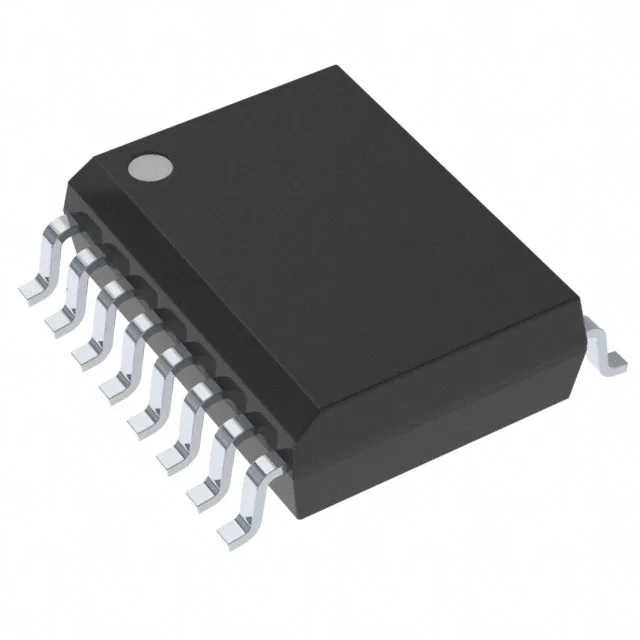
MOQ 1 · Tape & Reel (TR); Cut Tape (CT) · RoHS · EIA-481 · DAP/DDP · T/T
Technical specifications
| Parameter / Attribute | Specification / Value |
|---|---|
| Series | 74HC |
| Logic type | Shift Register |
| Output type | Tri-State |
| Mounting | Surface Mount |
| Supply voltage | 2V ~ 6V |
| Operating temperature | -40°C~85°C |
| Package | Tape & Reel (TR); Cut Tape (CT) |
| Function | Serial to Parallel, Serial |
| Case | 16-SOIC (0.295\", 7.50mm Width) |
| Number of elements | 1 |
| Number of bits per element | 8 |
Need Stock or a Drop-in Second-Source for SN74HC595DWR?
Package: DIP-16 / SOIC-16 · Pin-compatible replacements with immediate Shenzhen spot stock
The 74HC595 is the expander of the microcontroller world: three pins in, eight latched outputs out, cascaded to infinity - the part behind LED matrices, relay banks, seven-segment displays and every hobby board that ran out of GPIO. The family substitution is the cleanest in logic: HC and HCT share a die and differ only in input thresholds (CMOS against TTL levels), the LS ancestor keeps the pinout at 5V with vintage power draw, and cascading works the same across all of them. Two parts sit nearby and cause most of the confusion: the TPIC6B595, a power version whose outputs sink instead of source and whose logic sense is inverted, and the CD4094, an older CMOS register from a different school with a strobe instead of a latch clock.
Verified Pin-Compatible Replacements (4 verified alternatives)
Same Die, TTL Thresholds
Shenzhen Spot Stock (24-48h Dispatch)
Functionally identical 8-bit serial-in/parallel-out register with latches and 3-state outputs; the difference is input thresholds - HCT always, HC only where the driving logic swings the full CMOS rail.
HCT runs 4.5V to 5.5V with TTL-compatible inputs; HC covers 2V to 6V and wants CMOS-level swings.
The Ancestor - Same Socket, 1980s Power Bill
Shenzhen Spot Stock (24-48h Dispatch)
The original LSTTL 595-series part: same function and pinout, fixed 5V operation, TTL thresholds and a supply current an order of magnitude above the CMOS parts.
5V only; the CMOS generation moved the family to wide-voltage low-power operation.
The Power Version - Sinks, Inverted, Bigger Body
Shenzhen Spot Stock (24-48h Dispatch)
The power-logic family member: open-drain outputs that sink up to about 50V / 150mA per channel (and more pulsed) - built for relays, solenoids and high-voltage LED arrays where the HC595s 35mA sourcing outputs give up.
Logic side at 5V; the outputs float free of the logic rail, which is the whole point.
The Other School - Strobe, Not Latch Clock
Shenzhen Spot Stock (24-48h Dispatch)
The 4000B-era 8-bit register: runs 3V to 15V direct from industrial rails, excellent noise immunity, but slow (single-digit MHz), weakly driven (about 10mA) and strobed rather than double-clocked.
3V to 15V - the part that lives on 12V industrial logic without a regulator.
Buyer & Quality Checklist for Sourcing Alternatives
- HC against HCT is the threshold choice, not a brand choice: HCT for TTL-era or marginal 3.3V drive at 5V supply, HC for full-rail CMOS drive or non-5V supplies. Flakiness that changes with the driver family is this letter.
- The two registers inside the 595 (shift and latch) are why it exists: outputs only move on the RCLK edge, so the display or relay bank never flashes mid-shift. Older parts without the latch (LS164) and strobed parts (CD4094) behave differently - repair with the architecture the board was designed around.
- Cascading is uniform across the HC/HCT/LS family: Q7S to the next DS, all clocks shared, three MCU pins for any chain length. When a chain misbehaves, check the first chip that shows wrong bits - the fault upstream is what its neighbors display.
- Output drive is 35mA class per pin with a package total well below 8 times that: LED arrays want series resistors and duty discipline, not just the shift register.
- The TPIC6B595 is the power path (sink-only, inverted sense, 20-pin) - never an accidental swap, always a design decision.
- In industrial repair, read the strobe versus latch question off the schematic before ordering: the two 16-pin bodies are interchangeable in the drawer and nowhere else.
Frequently Asked Technical Questions
Q: What is the difference between 74HC595 and 74HCT595?
A: Input thresholds only: HCT accepts TTL-level inputs at 5V supply, HC expects CMOS-level swings and runs from 2V to 6V. Same die, same pinout, same behavior - the choice follows the driving logic levels.
Q: Can I replace a 74HC595 with a TPIC6B595?
A: Same shift protocol, different electrical world: the TPIC sinks instead of sources, inverts the logic sense (1 = on), handles up to about 50V on the outputs and lives in a 20-pin body. It is a relay/solenoid driver - a wiring and layout decision, not a substitution.
Q: Is CD4094 a 74HC595 replacement?
A: No - different generation and behavior: strobe latch instead of double clock, 3-15V supply, far slower and weaker drive. It serves the same role on 4000B-era boards; the firmware and pin functions are not interchangeable.