What this 74HC inverting buffer does on your board
It takes a logic input and outputs the inverted version, with the output bus able to be tri-stated via an output-enable control. This makes it a standard choice for bus isolation, signal inversion, or driving a shared data bus where multiple sources need to release the line.
The 2V to 6V supply range is the headline compatibility feature. If your board runs a 3.3V microcontroller and a 5V peripheral, this buffer can sit on either rail and still switch correctly. The 7.8mA source and sink capability is typical for HC logic — enough to drive a few CMOS gate inputs or a low-power LED indicator, but not enough for a high-current relay or a long backplane trace without a line driver. For bus applications, the 3-state output lets multiple buffers share the same data lines; just make sure the output-enable logic is wired so only one buffer is active at a time.
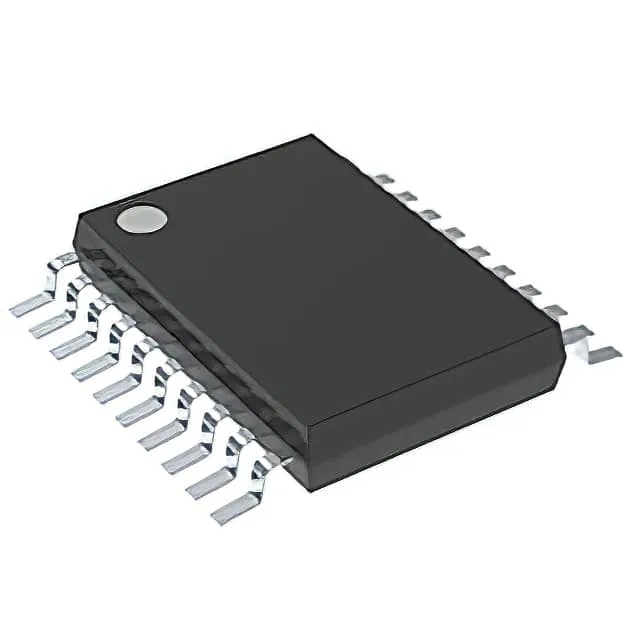
Package and footprint — 20-TSSOP
The 20-TSSOP package (4.40mm body width) is a compact surface-mount footprint that fits on dense PCBs. It is a common package for 8-bit bus buffers, so the land pattern is well-documented. The part is also available in Cut Tape (CT) for prototyping, which is useful for small-batch builds.