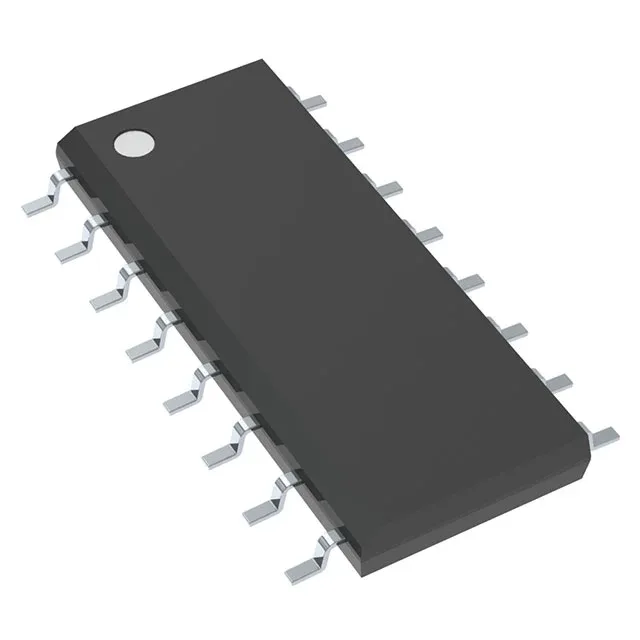
Inverting buffer with 3-state — bus isolation and signal inversion in one package
The Texas Instruments SN74HC368D is a hex inverting buffer with 3-state outputs from the 74HC family. It takes a logic input and outputs its complement, with each output able to be placed into a high-impedance state via the output-enable controls. This makes it a standard choice for shared data buses where you need to invert a signal and then disconnect the driver when another device talks. The two enable pins map to two groups of buffers: one 2-bit and one 4-bit, giving flexible bus-width coverage. Supply range spans 2V to 6V, so it works on legacy 5V TTL rails and modern 3.3V logic supplies without a level translator. Output drive is 7.8 mA per pin — enough for a single TTL load or a few CMOS fan-outs, but not for driving a long backplane trace directly.
There is no last-time-buy risk for current production.
What the 7.8 mA output rating means for your bus
The 7.8 mA high/low output current is typical for the 74HC family. It can drive one standard TTL load (about 1.6 mA) or several CMOS gate inputs (each a few microamps). If you need to drive a 50-ohm backplane or a long cable, you will need a bus transceiver with higher drive, such as the 74ABT or 74LVTH series. For on-board buffering between two logic ICs, this part is a clean fit.