What this octal flip-flop does on your board
The SN74HC273QDWRG4Q1 is an octal D-type flip-flop from TI's 74HC family — eight flip-flops in one 20-pin SOIC package, each capturing the D input on the rising edge of the clock and holding it until the next clock edge or until the master reset (MR) line pulls low. The master reset is asynchronous: when MR goes low, all eight outputs reset to logic low immediately, regardless of the clock state. This is useful for power-on initialization or clearing a register in one shot without cycling the clock. With a 60 MHz maximum clock frequency and 27 ns propagation delay (at 6 V, 50 pF load), this part handles moderate-speed bus registers, address latching, or status capture in industrial control logic where the 74HC family's balance of speed and noise margin is a good fit.
Supply range and temperature grade
The 2 V to 6 V supply range means the SN74HC273QDWRG4Q1 runs directly from a 3.3 V or 5 V rail without a separate regulator — common in mixed-voltage digital systems where the 74HC family's CMOS inputs are 5 V tolerant at the higher end. Rated for -40°C to 125°C ambient, this is the full automotive temperature grade (AEC-Q100 implied by the Q1 suffix). The 8 µA typical quiescent current keeps the thermal budget low even at 125°C, and the 5.2 mA output drive per channel is enough to light an LED or drive a CMOS input on the next stage.
Package and footprint reality
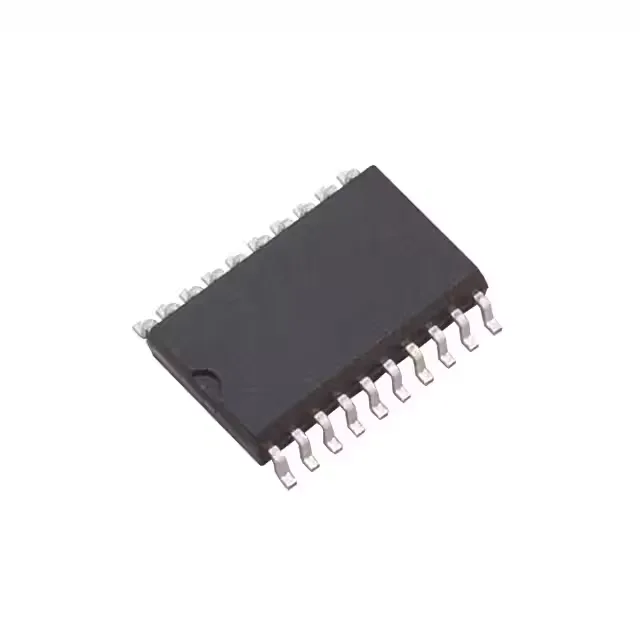
Housed in a 20-SOIC wide-body package (7.50 mm body width), the 1.27 mm pin pitch is layout-friendly — two-layer boards route it without vias for most signal counts. The 3 pF input capacitance per pin is low enough that the clock line sees minimal loading even with all eight inputs switching. Available in Tape & Reel (TR) or Cut Tape (CT) options — the TR variant is the standard for pick-and-place assembly; CT suits prototyping or small-batch builds where reel quantities are excessive.
Lifecycle and sourcing posture
No minimum order threshold beyond the reel or cut-tape increment.