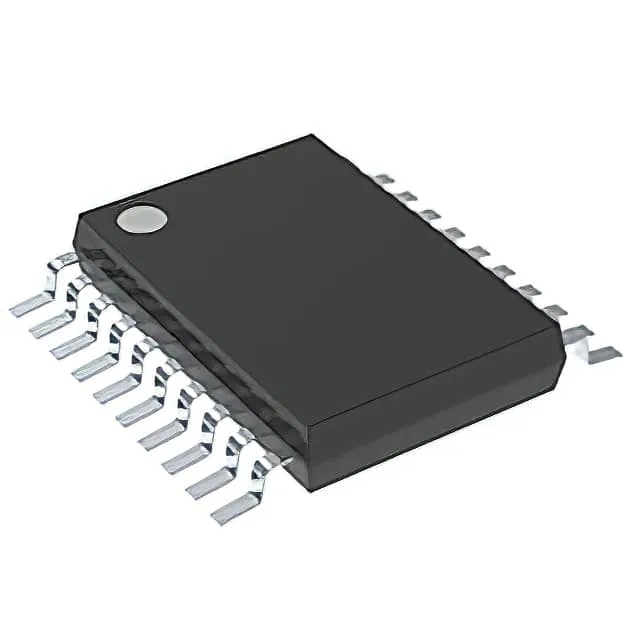
Texas Instruments SN74HC244PWR — Analog & Data Acquisition

SN74HC244PWR Texas Instruments 74HC Buffer, 2V-6V, 20-TSSOP

MPNSN74HC244PWR
End of Life

Texas Instruments 74HC series buffer, non-inverting, SN74HC244PWR, 2V–6V supply, 7.8 mA output, 3-state, 20-TSSOP, -40°C to 85°C.

$0.58Ref. price · indicative, final on quote
Packaging20-TSSOP (0.173", 4.40mm Width)
RoHSROHS3 Compliant
Series74HC
Independent supplier — new & surplus stockAuthenticity-screened · ESD-safe packingListing updated Aug 2026

Specifications

SN74HC244PWR specifications
ParameterValue
Series74HC
Logic typeBuffer, Non-Inverting
Output type3-State
MountingSurface Mount
Supply voltage2V ~ 6V
Current - output high, low7.8mA, 7.8mA
Operating temperature-40°C ~ 85°C (TA)
PackageTape & Reel (TR); Cut Tape (CT)
Case20-TSSOP (0.173\", 4.40mm Width)
Number of elements2
Number of bits per element4

Product details

Octal buffer, 2V–6V rail, 3-state outputs

The SN74HC244PWR is a Texas Instruments 74HC-series octal buffer with non-inverting logic and 3-state outputs, packaged in a 20-TSSOP (4.40 mm wide) for surface-mount assembly. Each of the two 4-bit elements sources or sinks 7.8 mA per channel, which is typical for the 74HC family and sufficient to drive a few CMOS inputs or a low-power LED indicator without a separate buffer stage.

Temperature grade and board-fit

The 20-TSSOP package (supplier device package 20-TSSOP) has a 0.65 mm pin pitch and a body width of 4.40 mm, which fits standard fine-pitch SMD layouts. The same footprint is shared across many 74HC and 74HCT 20-pin TSSOP buffers, so a board designed for one can often accept the other with a BOM change only.

Frequently asked questions

What is the closest functional second-source to SN74HC244PWR?

The SN74AHCT540DGVR is a different device — it is an inverting buffer from the 74AHCT series (4.5V–5.5V supply) with 8-bit single-element architecture, whereas the SN74HC244PWR is non-inverting, 2V–6V, and dual 4-bit. They are not pin-compatible or functional drop-in replacements; a board redesign or at least a layout review is required.