What the 7.8 mA drive tells you about fit
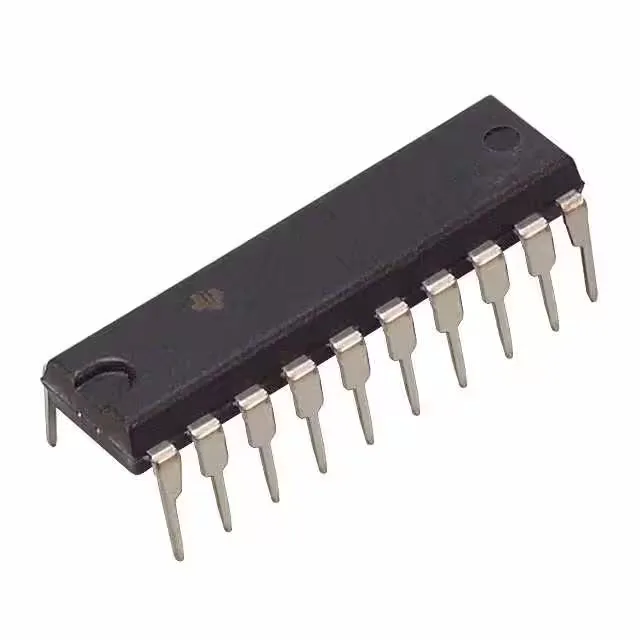
The SN74HC244N is a 74HC-series octal buffer with non-inverting logic and 3-state outputs, in a 20-pin DIP package. It runs on a 2V to 6V supply rail, which means it can sit on a 3.3V or 5V bus without a separate level translator — the same part works across both logic families. Each output sources or sinks 7.8 mA. That is enough to drive a standard TTL input or a low-power LED indicator, but not a relay coil or a high-capacitance bus without a buffer stage. On a repair bench, if the scorch mark is on a failed line driver, this part drops in as a straight swap for any 74HC244 in a DIP footprint.
Two elements, four bits each — the channel map
The SN74HC244N contains two independent buffer elements, each handling four bits. That gives you eight total channels in one 20-pin package — useful for splitting a data bus into upper and lower nibbles or driving two separate 4-bit lines from one IC. The 3-state output control lets you float the outputs when the chip is deselected, which is standard for shared data buses where multiple devices talk over the same traces. On a board with a dead octal buffer, the 3-state behaviour is often the first thing to check with a logic probe — a stuck-high output that won't tri-state points to a failed die.
Temperature grade and package reality
Rated for -40°C to 85°C ambient, the SN74HC244N covers industrial temperature range. That means it is fine for factory-floor control panels and outdoor telecom cabinets, but not for under-hood automotive or downhole drilling — those need the -40°C to 125°C grade. The 20-DIP (0.300-inch body width, 7.62 mm) is a through-hole package. It mates with standard DIP sockets or solders directly into plated through-holes. On a rework bench, this is one of the easier ICs to swap — no hot air needed, just a desoldering iron or solder wick and a steady hand.
Lifecycle and compliance — what the BOM needs to know
ROHS3 compliant per the manufacturer.