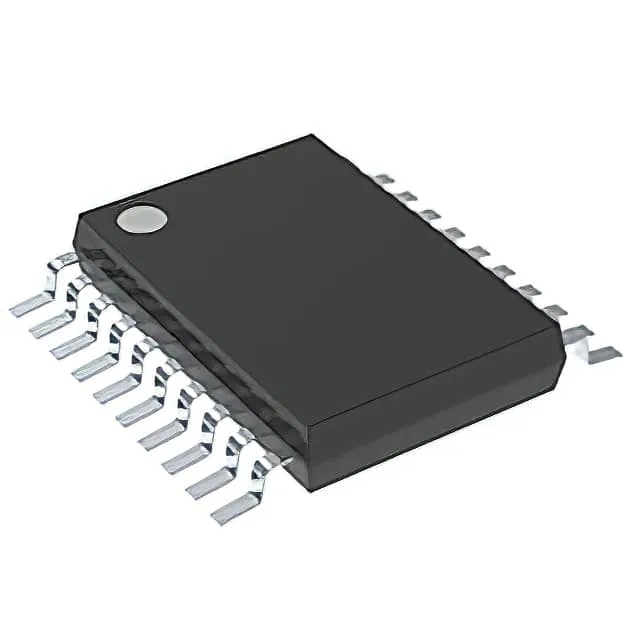
Texas Instruments SN74HC241PW — Analog & Data Acquisition

SN74HC241PW Buffer Non-Inverting 3-State 20-TSSOP, 2V-6V

MPNSN74HC241PW
End of Life

Texas Instruments SN74HC241PW, Series 74HC, Buffer Non-Inverting, 3-State outputs, 2V to 6V supply, 7.8mA drive per pin, 2 elements x 4 bits, -40°C to 85°C, 20-TSSOP package.

$1.32Ref. price · indicative, final on quote
Packaging20-TSSOP (0.173", 4.40mm Width)
RoHSROHS3 Compliant
Series74HC
Independent supplier — new & surplus stockAuthenticity-screened · ESD-safe packingListing updated Aug 2026

Specifications

SN74HC241PW specifications
ParameterValue
Series74HC
Logic typeBuffer, Non-Inverting
Output type3-State
MountingSurface Mount
Supply voltage2V ~ 6V
Current - output high, low7.8mA, 7.8mA
Operating temperature-40°C ~ 85°C (TA)
PackageTube
Case20-TSSOP (0.173\", 4.40mm Width)
Number of elements2
Number of bits per element4

Product details

Buffer, non-inverting, 3-state — what this part does on the bus

It belongs to the 74HC family, operating from 2V to 6V supply, which makes it a direct drop-in for designs that need to isolate or drive a shared bus — address/data lines, control signals, or memory chip-selects — without inverting the signal polarity. Each of the two elements handles four bits independently, and the 3-state output lets you float the bus when the output-enable is inactive, so multiple devices can share the same trace without contention.

Supply range and output drive — what the 2V to 6V and 7.8 mA mean for your BOM

The 2V to 6V supply range covers 3.3V and 5V logic rails without a level translator. If your board runs a 3.3V microcontroller and a 5V peripheral, this buffer can sit on either side — just match VCC to the rail the outputs need to swing. The 7.8 mA source and sink per pin drives one or two standard CMOS loads directly.

TI lists the SN74HC241PW as an active product.

Frequently asked questions

What is the difference between SN74HC241PW and SN74HCT241PW?

The SN74HCT241PW is the TTL-compatible variant: it operates from a 4.5V to 5.5V supply and its input thresholds match TTL logic levels (0.8V low, 2.0V high), whereas the SN74HC241PW uses CMOS thresholds (30% and 70% of VCC) over the full 2V to 6V range. If your upstream driver is a 5V TTL output, the HCT version avoids the need for a pull-up; for mixed-voltage or 3.3V systems, the HC version is the right choice.