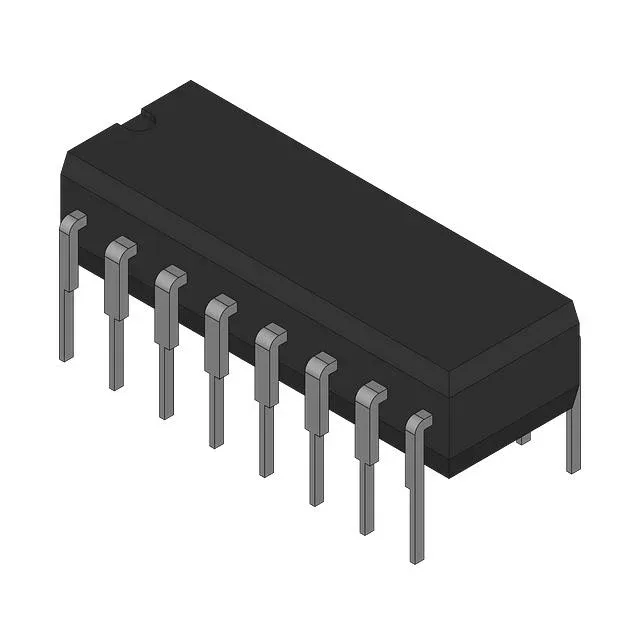
What the 50 MHz clock and 27 ns propagation delay mean for your timing budget
The SN74HC174NE4 is a hex D-type flip-flop from TI's 74HC family, clocked at 50 MHz with a positive-edge trigger and master-reset function. That 50 MHz is the maximum toggle rate the internal logic can sustain — but the real timing constraint is the 27 ns max propagation delay at 6 V and 50 pF load. In a daisy-chained register, that delay adds per stage, so the actual system clock that reaches the next device is lower than 50 MHz once you account for setup and hold margins. The 8 µA quiescent current and 5.2 mA output drive per pin are typical for the HC family — the drive current is enough to light a standard LED or feed a single TTL load, but not enough to drive a long bus without a buffer. The 3 pF input capacitance is low, so the clock line doesn't load heavily, but the master-reset input still needs a clean edge to avoid metastability.
Active production — no end-of-life watch needed
No second-source cross-reference is officially listed by TI, but the 74HC family is a JEDEC standard — many logic vendors offer pin-compatible 74HC174 parts.