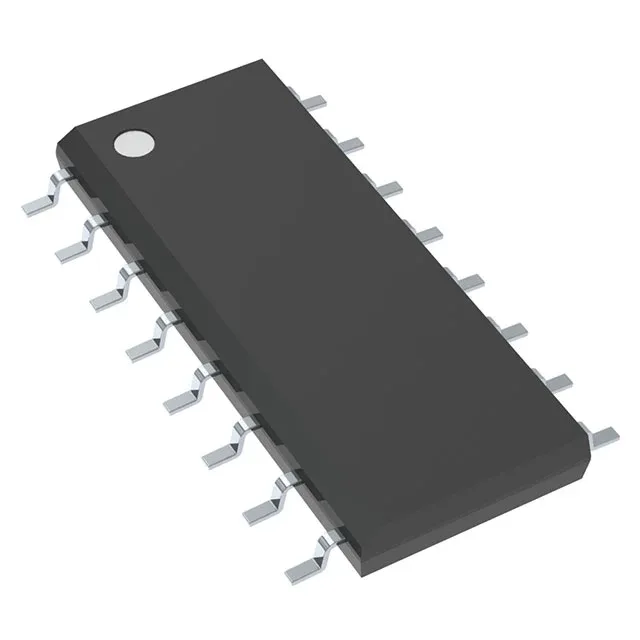
It accepts data either through eight parallel inputs (D0–D7) or a serial input, and shifts it out serially on the QH pin under control of a clock and shift/load signal. The push-pull output drives standard CMOS or TTL loads directly. Typical applications include expanding digital inputs on a microcontroller — reading a bank of switches or sensors over a single serial line — or converting parallel data from an older bus into a serial stream for a UART or SPI port. The wide supply range (2V to 6V) lets it interface with 3.3V or 5V logic without level translation.
Rated for 2V to 6V supply, the SN74HC166D runs from a single 3.3V or 5V rail with no extra regulator. If your panel or motor drive sees -20°C startup or 70°C inside the enclosure, this part stays within spec. The 74HC family's typical propagation delay at 5V is around 20 ns, which is fast enough for clock rates up to several tens of MHz; for higher speed, the 74HCT or 74AC variants would be the next step up.