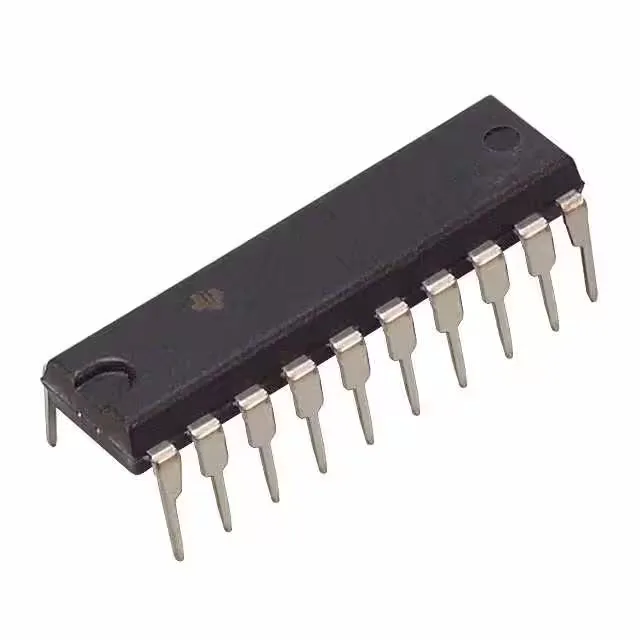
20-pin DIP — board-fit and assembly reality
The SN74F245N comes in a 20-DIP (0.300", 7.62mm) through-hole package, supplier device package 20-PDIP. This is a standard 0.100-inch pitch DIP — the footprint is universal across socketed and soldered boards, and the 0.300-inch row spacing fits a single-width socket. No MSL rating to worry about; the through-hole body handles reflow or wave solder without moisture sensitivity concerns. The through-hole form factor means the part sits above the board — plan for a 0.150-inch seated height clearance under the next board or cover. The lead pitch and hole diameter match the standard DIP-20 land pattern; no fine-pitch alignment issues on the pick-and-place if you're using a through-hole feeder.
Output drive — what the current numbers mean for bus loading
The SN74F245N specifies two sets of output current ratings: 3mA source / 24mA sink (standard 74F family drive) and a second set at 15mA source / 64mA sink. The higher 64mA sink capability means this transceiver can drive heavily loaded buses or multiple TTL inputs without external buffers — useful in a backplane or memory-address bus where the fan-out exceeds 10 standard LS loads. The 3mA source current is the limiting factor for driving CMOS inputs with high input capacitance — if the bus has more than a few CMOS loads, the rise time will stretch. For mixed TTL/CMOS buses, the 15mA source rating gives better margin. The 64mA sink is the headline figure for bus contention scenarios; it clears a low-impedance bus quickly.
5V supply and temperature — where this part fits
The SN74F245N operates from a 4.5V to 5.5V supply — a standard 5V rail with ±10% tolerance. This is the classic TTL supply range, so the part is a drop-in for legacy 5V logic systems, ISA-style buses, and microcontroller interfaces that still run on 5V. The 74F family is faster than 74LS but slower than 74ACT — typical propagation delay is around 4-5 ns per gate, which puts it in the 50-100 MHz bus range. For a 5V-only design that needs bidirectional bus control without level translation, this is a straightforward choice.
Active lifecycle and compliance — no obsolescence worry
No need to stockpile or worry about a sudden EOL. The 20-DIP package is a common through-hole form factor that multiple distributors carry.