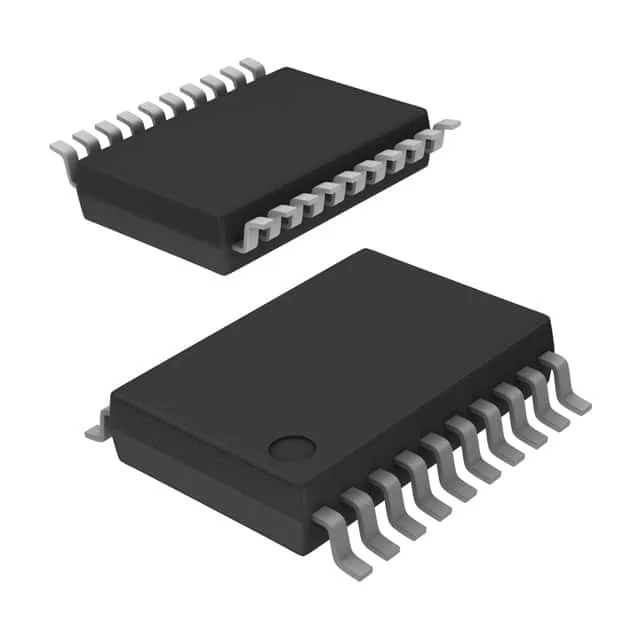
Octal bus transceiver for 5V backplane and memory-mapped I/O
The Texas Instruments SN74F245DBR is an octal (8-bit) bidirectional bus transceiver from the 74F family, designed for asynchronous two-way data flow between a data bus and a peripheral bus. Its non-inverting logic and 3-state outputs let multiple devices share a common bus without contention — a standard building block for 5V backplanes, memory-mapped I/O, and microcontroller port expansion in commercial-temperature equipment.
Supply rail and drive strength — the fit decisions
If your board runs 3.3V I/O, this transceiver will not switch cleanly — the 74F family is a 5V-only logic family. The output drive is specified as two sets: 3mA source / 24mA sink, and 15mA source / 64mA sink. The higher figure applies when the output is driving a heavily loaded bus line; the lower figure is the rating when the device is in a lighter fan-out configuration. For a 5V backplane with multiple loads, budget for the 64mA sink capability to maintain signal integrity.
It belongs in office equipment, test instruments, and indoor industrial controllers — not in an engine bay, outdoor telecom cabinet, or cold warehouse. If your BOM requires -40°C operation, you need a 74ACT or 74LVC variant with industrial temperature range.
Housed in a 20-pin SSOP (0.209" body width, 5.30mm), the SN74F245DBR uses a fine-pitch surface-mount footprint. Verify your PCB land pattern matches the SSOP-20 footprint — it is narrower than a standard SOIC-20 and will not fit a SOIC pad layout.
The 74F series is mature but still supported for legacy 5V designs.