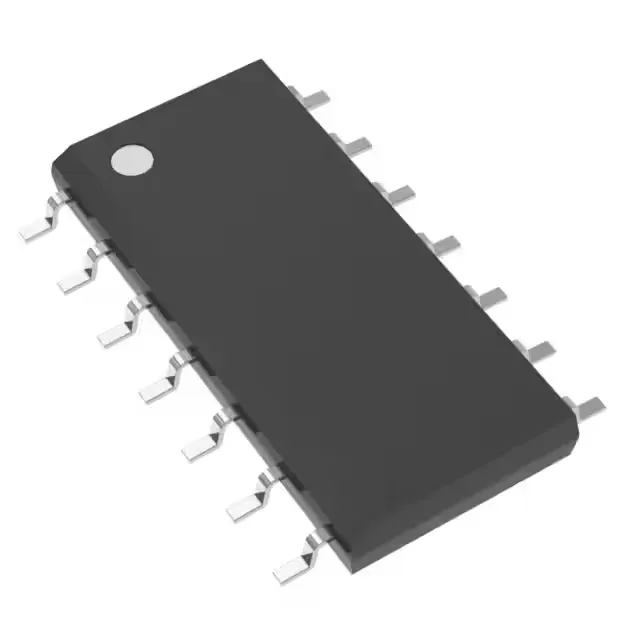
The Texas Instruments SN74F04D is a hex inverter from the 74F family, packing six independent inverter gates into a 14-SOIC package. That 5 ns figure is the headline spec: it tells you the gate can toggle cleanly at clock rates well above 100 MHz in a 5 V logic system, making it a fit for fast address decoding, clock buffering, or signal cleanup where a 74LS or 74HC part would add too much skew. The supply range is 4.5 V to 5.5 V, so it runs from a standard 5 V rail with margin. Input thresholds are TTL-compatible: low at 0.8 V max, high at 2 V min, which means it can be driven by 3.3 V logic that meets the 2 V high threshold — but check the 3.3 V output VOH against the 2 V VIH for noise margin. Output drive is asymmetrical: 1 mA sourcing, 20 mA sinking, typical of 74F totem-pole outputs.
Package and footprint — 14-SOIC
The SN74F04D comes in a 14-SOIC package with a body width of 3.90 mm (0.154 inches). The supplier device package is 14-SOIC. Surface-mount assembly with a standard SOIC footprint; no thermal pad to worry about. The shipping medium is Tube, so if your pick-and-place line prefers Tape & Reel, the part is also available in that variant under a different order code — confirm the reel suffix when ordering for automated assembly.