Bus switch, not a buffer — why that matters for signal routing
The SN74CBT3244PW is a 4-bit bus switch from TI's 74CBT family, configured as 4 x 1:1 SPST switches with two independent circuits. Unlike a logic buffer or transceiver, a bus switch presents near-zero propagation delay and minimal signal distortion — it acts like a low-ON-resistance analog pass gate when enabled, and a high-impedance isolation when disabled. This makes it the right choice for connecting or disconnecting digital buses without adding timing skew, such as multiplexing memory banks, isolating peripheral interfaces, or sharing a data bus between multiple controllers.
The supply range is 4.5 V to 5.5 V single-supply, meaning this switch is designed for traditional 5 V TTL/CMOS logic environments. If your board runs on 3.3 V or lower, this part will not operate — you would need a 74CBT-family variant specified for lower VCC. The 5 V rail also sets the switch's ON-state resistance and signal swing; expect the pass transistor to conduct rail-to-rail signals up to VCC.
Industrial temperature range and active lifecycle
20-TSSOP — compact footprint for dense boards
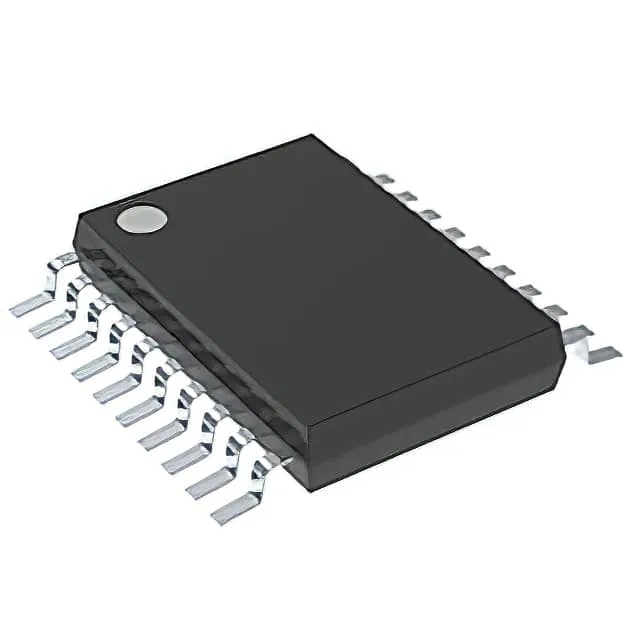
Housed in a 20-pin TSSOP package (0.173" body width, 4.40 mm), this is a fine-pitch surface-mount part suited for high-density PCBs.