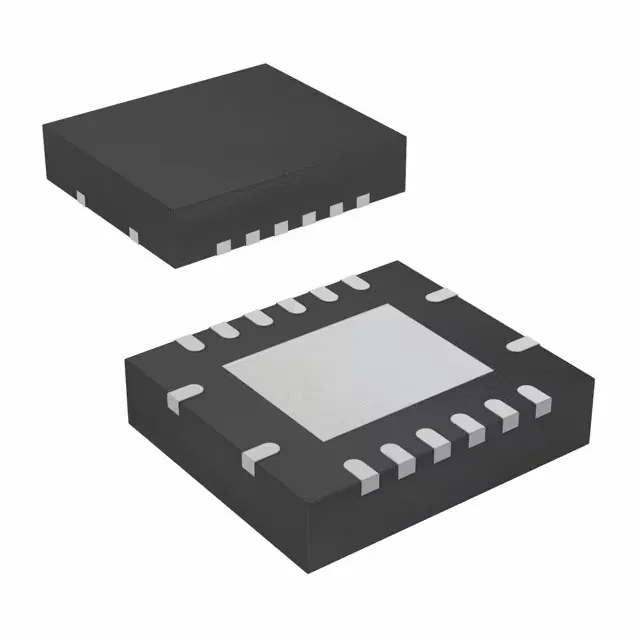
It routes one of four input channels to a common output per section, operating from a 2.3V to 3.6V rail — covering both 2.5V and 3.3V logic families without a level translator.
The 2.3V to 3.6V single-supply range means this part runs directly off a 3.3V or 2.5V rail without an extra regulator. At 3.3V nominal, the 300 mV headroom to the 3.6V absolute maximum is tight — a switching supply with 5% ripple pushes 3.465V, leaving only 135 mV margin. If your board sees 3.6V transients, budget a series resistor or a TVS clamp on the supply pin.
Package and thermal: the exposed pad matters
Without those vias, the junction temperature rises faster than the datasheet thermal resistance suggests — especially if the mux is switching near the 85°C end of the range. The pad is also the ground return; a poor solder joint here adds inductance that degrades signal integrity at higher edge rates.
Lifecycle and compliance: active and RoHS3
The ROHS3 exemption-free status simplifies compliance declarations for EU and California markets.