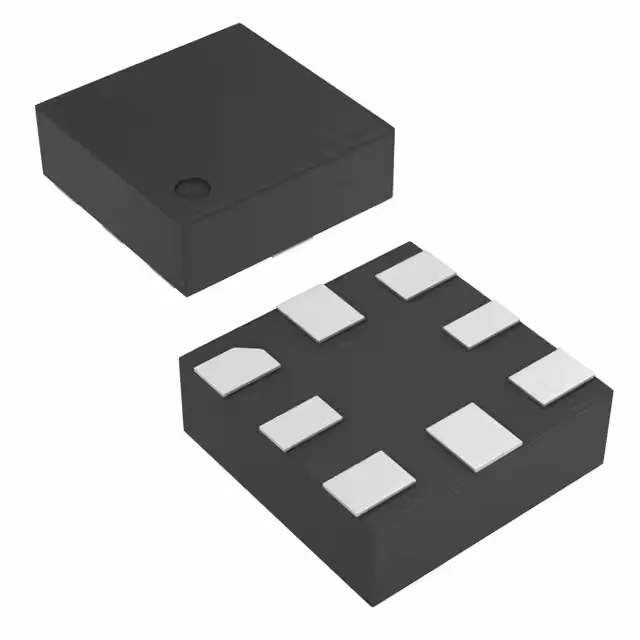
Texas Instruments SN74AUP3G17RSER — Logic ICs

SN74AUP3G17RSER TI 74AUP Buffer, Schmitt Trigger, 0.8V–3.6V

MPNSN74AUP3G17RSER
End of Life

Texas Instruments 74AUP series SN74AUP3G17RSER, Buffer, Non-Inverting, Schmitt Trigger Input, Push-Pull Output, 0.8V ~ 3.6V Supply, 4mA Output, -40°C ~ 85°C, 8-UFQFN (1.5x1.5mm).

$1.11Ref. price · indicative, final on quote
Packaging8-UFQFN
RoHSROHS3 Compliant
Series74AUP
Independent supplier — new & surplus stockAuthenticity-screened · ESD-safe packingListing updated Aug 2026

Specifications

SN74AUP3G17RSER specifications
ParameterValue
Series74AUP
Input typeSchmitt Trigger
Logic typeBuffer, Non-Inverting
Output typePush-Pull
MountingSurface Mount
Voltage0.8V ~ 3.6V
Current - output high, low4mA, 4mA
Operating temperature-40°C ~ 85°C (TA)
PackageTape & Reel (TR); Cut Tape (CT)
Case8-UFQFN
Number of elements3
Number of bits per element1

Product details

The Texas Instruments SN74AUP3G17RSER is a triple non-inverting buffer from the 74AUP low-power logic family. Each of its three elements has a Schmitt trigger input, which provides hysteresis for clean switching on slow or noisy edges — useful when interfacing to sensors, mechanical switches, or RC-filtered signals. Outputs are push-pull, rated for 4 mA source and sink. It comes in an 8-UQFN package measuring 1.5 mm × 1.5 mm, suited for space-constrained PCBs in portable or industrial equipment.

8-UQFN footprint — layout notes

The 8-UQFN (1.5 × 1.5 mm) package is a fine-pitch, leadless land-grid array. The pad layout needs a soldermask-defined pad per the TI application note, and the small thermal pad under the package wants a via-in-pad or at least a short trace to a ground plane for heat sinking. Stencil aperture reduction helps avoid solder bridging on the 0.5 mm pitch.

It is ROHS3 compliant. For new designs, there is no last-time-buy risk.

Frequently asked questions

Does SN74AUP3G17RSER have Schmitt trigger input?

Yes, the SN74AUP3G17RSER has Schmitt trigger inputs on all three buffer elements, providing hysteresis for noise rejection and clean switching on slow edges.