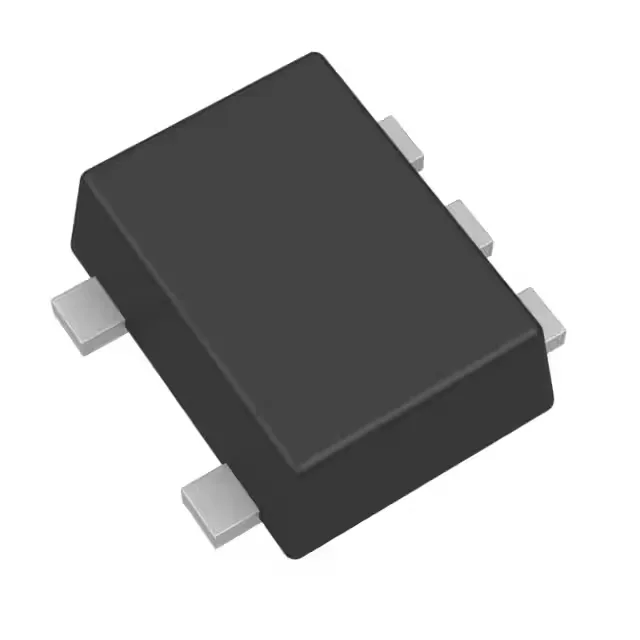
Texas Instruments SN74AUP1G17DRLR — Logic ICs

SN74AUP1G17DRLR Buffer, Schmitt Trigger, SOT-553, 0.8V-3.6V

MPNSN74AUP1G17DRLR
End of Life

Texas Instruments 74AUP series SN74AUP1G17DRLR, single Schmitt-trigger buffer, non-inverting, push-pull output, 0.8V to 3.6V supply, 4mA output drive, SOT-553 package, -40°C to 85°C.

$0.59Ref. price · indicative, final on quote
PackagingSOT-553
RoHSROHS3 Compliant
Series74AUP
Independent supplier — new & surplus stockAuthenticity-screened · ESD-safe packingListing updated Aug 2026

Specifications

SN74AUP1G17DRLR specifications
ParameterValue
Series74AUP
Input typeSchmitt Trigger
Logic typeBuffer, Non-Inverting
Output typePush-Pull
MountingSurface Mount
Voltage0.8V ~ 3.6V
Current - output high, low4mA, 4mA
Operating temperature-40°C ~ 85°C (TA)
PackageTape & Reel (TR); Cut Tape (CT)
CaseSOT-553
Number of elements1
Number of bits per element1

Product details

Single Schmitt-trigger buffer for noisy, low-voltage rails

It takes a noisy or slow-edged input and outputs a clean, fast push-pull signal, making it a go-to part for debouncing switches, conditioning sensor outputs, or interfacing with slow-rise-time oscillators. The supply range spans 0.8V to 3.6V, so it works directly from a single Li-ion cell or a 1.8V/2.5V/3.3V rail without a separate level translator.

The 0.8V minimum supply is unusually low for a standard logic buffer; most 74LVC or 74AHCT parts stop at 1.65V or 2V. This part lets a 0.9V or 1.2V core rail drive a buffer directly, saving a regulator or level-shifter IC.

SOT-553 footprint and board integration

Housed in a 5-pin SOT-553 package, this buffer takes up roughly 1.6 mm × 1.6 mm of board area. That makes it a strong fit for space-constrained designs like wearables, sensor modules, or compact IoT nodes. The small pads mean hand-soldering is tricky — a reflow profile with a fine-pitch stencil is the reliable assembly route.

ROHS3 compliance is confirmed.

Frequently asked questions

Is SN74AUP1G17DRLR a Schmitt-trigger input?

Yes, the input type is Schmitt trigger, which provides hysteresis for noise rejection and slow-edge conditioning.