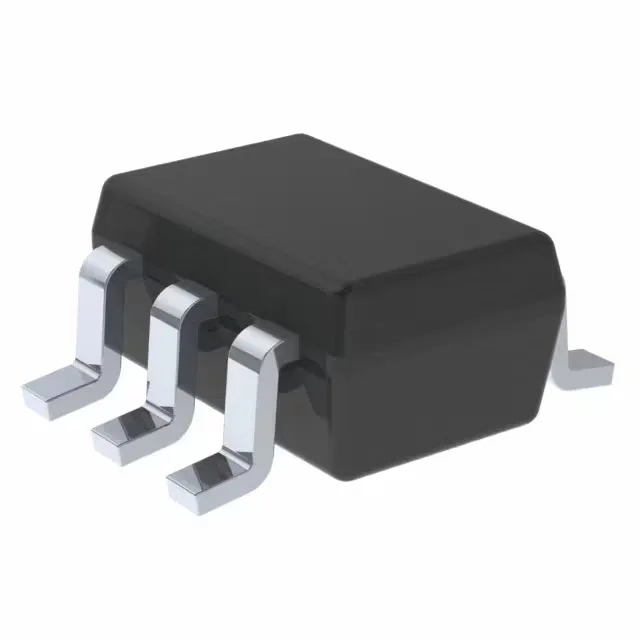
Texas Instruments SN74AUC2G06DCKR — Analog & Data Acquisition

TI SN74AUC2G06DCKR Dual Open-Drain Inverter, 0.8V-2.7V

MPNSN74AUC2G06DCKR
End of Life

Texas Instruments 74AUC series, SN74AUC2G06DCKR, Inverter, Open Drain, 2 circuits, 2 inputs, 0.8V to 2.7V supply, -40°C to 85°C, SC-70-6 package.

$0.75Ref. price · indicative, final on quote
Packaging6-TSSOP, SC-88, SOT-363
StockContact for availability
MOQ1 pcs
  • 100% new & originalTraceable channels only — no refurbs, no pulls, no remarked parts.
  • Date & lot codes on quoteStated per line before you commit; label photos on request.
  • MSL-compliant ESD packingMoisture-sealed bags with indicator cards; reels photo-verified.
  • PayPal buyer protectionPay by T/T, PayPal or Payoneer — card payments covered end to end.

Specifications

SN74AUC2G06DCKR Technical Specifications
ParameterValue
Series74AUC
Logic typeInverter
Mounting typeSurface Mount
Voltage0.8V ~ 2.7V
Current - quiescent10 µA
Current - output high, low-, 9mA
Number of inputs2
Operating temperature-40°C ~ 85°C
PackageTape & Reel (TR); Cut Tape (CT)
FeaturesOpen Drain
Case6-TSSOP, SC-88, SOT-363
Number of circuits2
Input logic level - low0V ~ 0.7V
Input logic level - high1.7V
Max propagation delay @ v, max CL1.2ns @ 2.5V, 30pF

Product details

What the 1.2 ns propagation delay means on the bus

At 2.5V and 30 pF load, max propagation delay is 1.2 ns. The delay is specified at the full load.

Lifecycle and sourcing — active, no LTB pressure

TI lists the SN74AUC2G06DCKR as Active with RoHS3 compliance. No last-time-buy notice, no end-of-life window on the horizon. That means you can design it into a new BOM without worrying about a forced respin in the next couple of years.

Frequently asked questions

Is SN74AUC2G06DCKR compatible with 1.8V logic?

Yes, at 1.8V VCC the input high threshold of 1.7V leaves about 100 mV of noise margin. The open-drain output can be pulled up to any voltage up to the absolute maximum of the output transistor (typically 2.7V), so it can drive a 1.8V input on the receiving side. Works fine for 1.8V systems as long as the input signal swing exceeds 1.7V.