Dual D-type in the 74AS family — 105 MHz clock edge
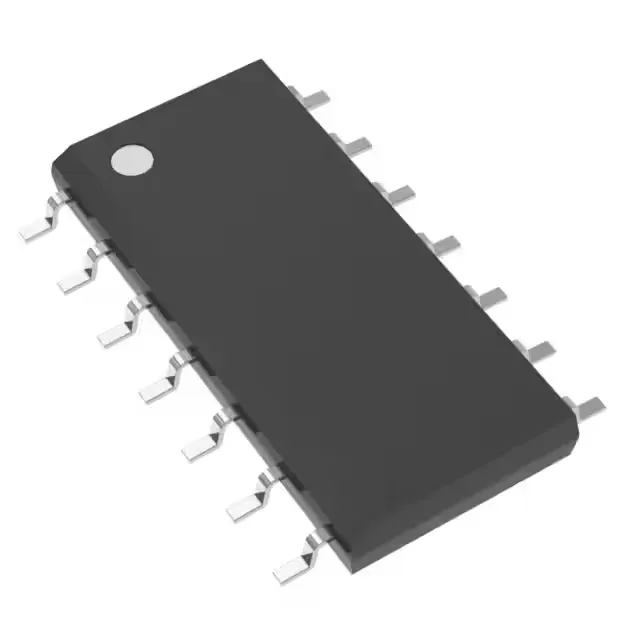
The SN74AS74ADR is a dual positive-edge-triggered D-type flip-flop from Texas Instruments' 74AS series, with independent set (preset) and reset inputs per flip-flop. Each of the two elements stores one bit, and the outputs are complementary — both Q and Q-bar are available on the 14-SOIC package. It clocks at 105 MHz, with a maximum propagation delay of 9 ns into a 50 pF load at 5 V supply. That 9 ns window governs the timing closure for the data-to-output path in a synchronous bus — the next stage must latch the data before the hold time expires, and this part gives the designer a tight but predictable 9 ns window at the nominal supply.
Supply, temperature, and drive — the operating envelope
The supply range is 4.5 V to 5.5 V, which is the standard 5 V ±10 % rail common in legacy TTL and mixed-voltage backplanes. The operating temperature is 0 °C to 70 °C — commercial grade, so this part is suited for indoor equipment, bench instrumentation, and telecom line cards that stay in a conditioned environment, not for an engine bay or outdoor cabinet. Quiescent current is 16 mA typical across both flip-flops, and the output stage can source 2 mA and sink 20 mA. The asymmetric drive — weak high, strong low — is characteristic of standard TTL outputs; the 2 mA source limit means the output rise time into a capacitive load will be slower than the fall time, which matters for bus timing when driving multiple inputs or long traces.
Active production, ROHS3, and sourcing posture
Texas Instruments lists the SN74AS74ADR as Active in its product lifecycle, and it carries ROHS3 compliance. It is supplied in a 14-pin SOIC package (body width 3.90 mm), in Tape & Reel or Cut Tape options. The surface-mount footprint is industry-standard for SOIC-14, so the PCB layout is shared with many other 74-series logic parts in the same package.