It takes two separate enable signals (one per 4-bit bank) to put the outputs into high-impedance, which is how you isolate a bus segment during power sequencing or when multiple drivers share a line. The 3-state output type means a logic HIGH on the output-enable pin turns the drivers off cleanly, letting another device drive the same net without contention.
Supply range and drive – the numbers that matter for fit
That is the main reason a designer picks this part over a 5 V-only buffer – it works straight off a modern low-voltage core supply. Output drive is rated 24 mA source and 24 mA sink, enough for a handful of CMOS inputs or a short PCB trace, but not for a long backplane or a relay coil. If you need more fanout, you step up to a bus transceiver with higher drive capability.
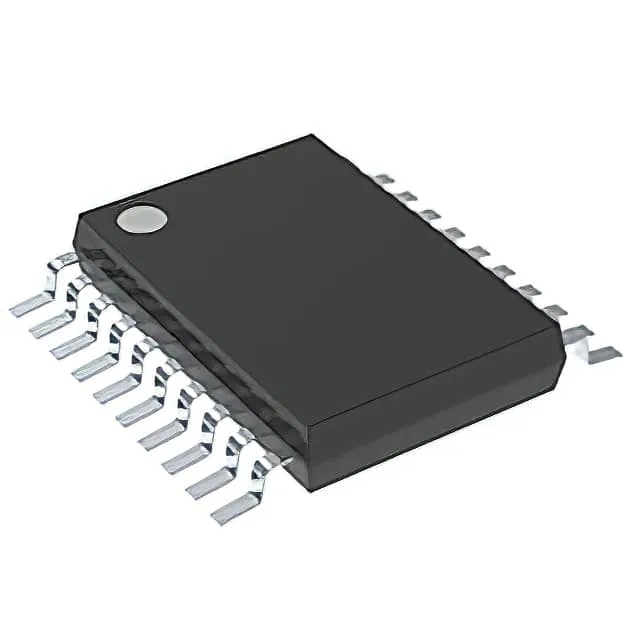
The 20-TSSOP package with 0.173" body width and 4.40 mm height is a fine-pitch surface-mount footprint – standard for low-voltage logic on densely populated boards. No exposed pad, so thermal management is straightforward; just keep the ambient within the rated range and the junction stays happy.