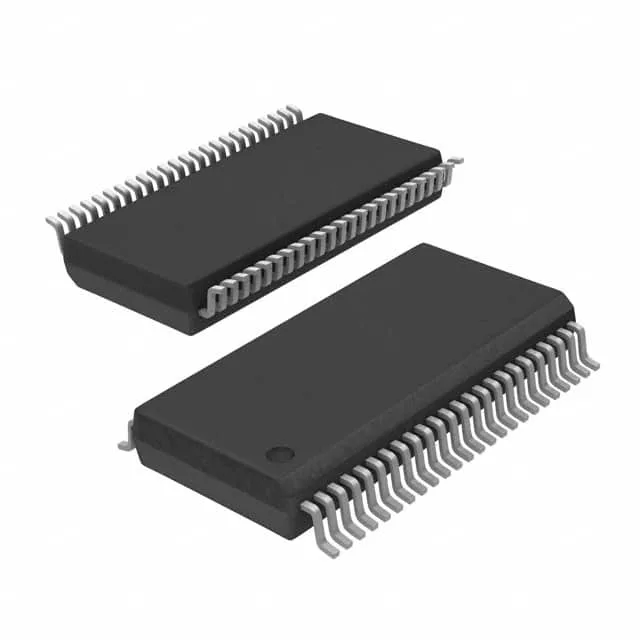
Texas Instruments SN74ALVCH16245DL — Analog & Data Acquisition

SN74ALVCH16245DL 16-bit Transceiver, 1.65V-3.6V, 48-SSOP

MPNSN74ALVCH16245DL
End of Life

Texas Instruments 74ALVCH series 16-bit transceiver, SN74ALVCH16245DL, non-inverting 3-state, 1.65V-3.6V supply, 24mA output, 48-SSOP, tube.

$2.52Ref. price · indicative, final on quote
Packaging48-BSSOP (0.295", 7.50mm Width)
RoHSROHS3 Compliant
Series74ALVCH
Sourced new & surplus through independent channelsAuthenticity-screened · ESD-safe packingListing updated Aug 2026

Specifications

SN74ALVCH16245DL specifications
ParameterValue
Series74ALVCH
Logic typeTransceiver, Non-Inverting
Output type3-State
MountingSurface Mount
Voltage1.65V ~ 3.6V
Current - output high, low24mA, 24mA
Operating temperature-40°C ~ 85°C (TA)
PackageTube
Case48-BSSOP (0.295\", 7.50mm Width)
Number of elements2
Number of bits per element8

Product details

16-bit bus transceiver with 1.65V-3.6V range

The SN74ALVCH16245DL is a 16-bit non-inverting transceiver from TI's 74ALVCH series, organized as two 8-bit elements with independent direction controls. It operates across a 1.65V to 3.6V supply range, making it suitable for mixed-voltage systems where a 1.8V or 2.5V core bus needs to drive a 3.3V peripheral bus. Each channel sources or sinks 24mA, enough to drive a standard CMOS load or a lightly loaded backplane trace without an external buffer. The 3-state outputs allow multiple transceivers to share a common data bus — the outputs go high-impedance when the output-enable pin is deasserted.

Package and temperature grade

Housed in a 48-lead SSOP (0.295-inch body width, 0.635mm pitch), the SN74ALVCH16245DL's footprint matches the standard 48-BSSOP land pattern.

Frequently asked questions

What is the closest functional second-source to SN74ALVCH16245DL?

The SN74ABT2245DW is a similar 8-bit non-inverting transceiver from TI's 74ABT series, but it runs on a 4.5V supply and has only one 8-bit element. The SN74ALVCH16245DL's 1.65V-3.6V range and dual 8-bit organization are not direct pin-replacements — a board spin would be needed to swap between them.