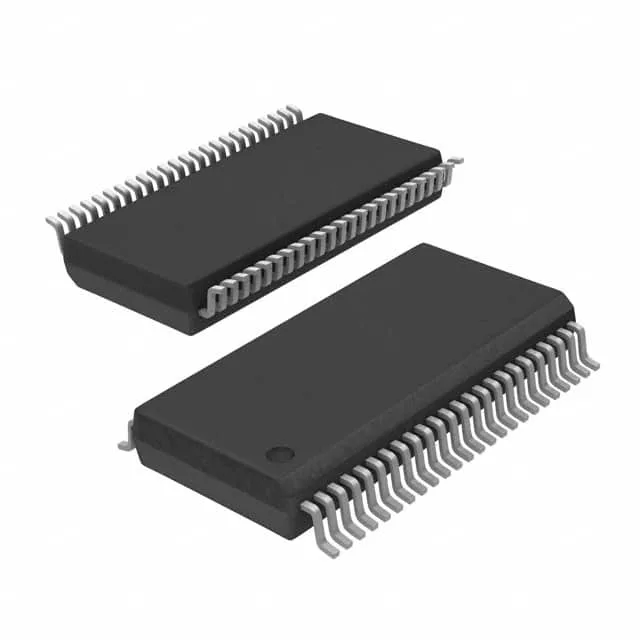
16-bit buffer for mixed-voltage bus isolation
The SN74ALVC16244ADLR: It packs four 4-bit elements into a single 48-SSOP package, each element capable of sinking or sourcing 24mA on both the high and low output states. The wide supply range from 1.65V to 3.6V lets it bridge 1.8V, 2.5V, and 3.3V logic domains without extra level shifters — a common requirement in mixed-voltage boards where a memory controller talks to a 3.3V peripheral over a shared data bus.
1.65V to 3.6V supply — what it buys you
The 1.65V minimum supply means this buffer runs directly off a 1.8V rail, which is the core voltage for many modern FPGAs and SoCs. At the top end, 3.6V covers a 3.3V supply with margin for transients. That span eliminates the need for a dedicated 3.3V-tolerant input stage when the buffer sits between a 1.8V controller and a legacy 3.3V peripheral — the device itself adapts to whichever rail it's powered from. The 24mA symmetric drive at both logic levels is enough to drive a heavily loaded parallel bus or a bank of LEDs through a resistor, but the real win is the consistent drive strength regardless of whether the output is high or low, which keeps rise and fall times matched on the bus.
48-SSOP package — rework and layout notes
The 48-BSSOP body (7.50mm wide, 0.295" pitch) is a standard SSOP footprint that reflows cleanly with a hot-air station if you preheat the board to 100°C. The 0.635mm lead pitch is forgiving enough for hand-soldering with a fine tip, but the 48 leads mean you'll want a flux pen and a clean iron. No thermal pad underneath, so all heat dissipation goes through the leads; keep the trace widths to the supply pins at 12 mil or wider for the 24mA per-output case when all 16 channels are switching simultaneously.
The 74ALVC family is mature and widely second-sourced. For a drop-in buffer replacement, stay within the 74ALVC or 74LVC families.