35 MHz clock and 16 ns propagation delay
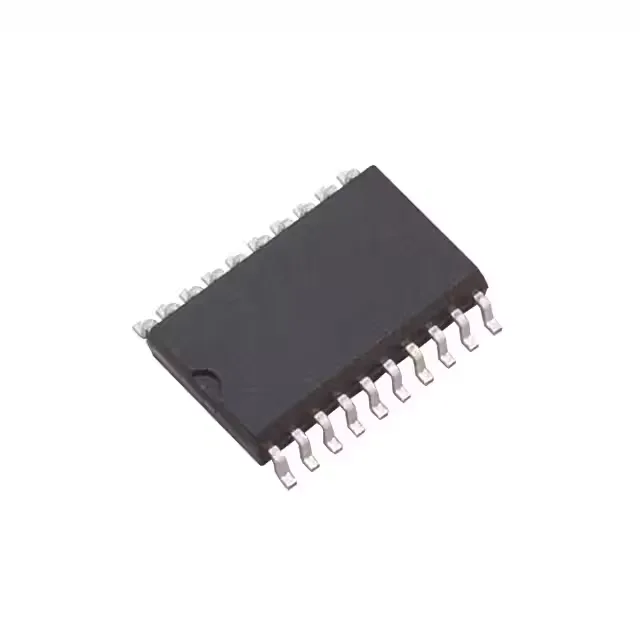
The SN74ALS534ADWR is an 8-bit D-type flip-flop from TI's 74ALS family, clocked at 35 MHz with a maximum propagation delay of 16 ns at 5 V into a 50 pF load. That 16 ns window sets the timing budget for downstream logic — if the next stage's setup time plus trace delay eats more than that, the data won't settle before the next clock edge. It's a single-element, 8-bit register with inverted tri-state outputs on a positive-edge trigger. The inverted output means the data stored at the clock edge appears complemented at the Q bar pin — useful when you need a negated bus signal without an extra inverter gate.
Supply and drive — 5 V rail, 24 mA sink
Runs on a 4.5 V to 5.5 V supply, so it's a straight 5 V part — no 3.3 V or 1.8 V variant here. The quiescent current draw is 19 mA, which is typical for ALS logic at this speed. Output drive is asymmetrical: 2.6 mA source, 24 mA sink. That sink current is strong enough to drive a low-power LED or a 5 V relay coil through a transistor, but the source side is weak — don't expect it to rail a high-impedance bus without a pull-up. Operating temperature is 0°C to 70°C, commercial grade. That's fine for a lab bench or an office-environment controller, but it won't survive under the hood or in a freezer. The 20-SOIC wide-body package (7.50 mm width) is the standard footprint for this density — the supplier device package is 20-SOIC, which matches the case code.
Active production, RoHS3 compliant
Texas Instruments lists the SN74ALS534ADWR as Active in production. It's ROHS3 compliant, so it passes the current EU restriction on hazardous substances without exemptions. The packaging options are Tape & Reel and Cut Tape — the DWR suffix indicates the wide-body SOIC on reel.