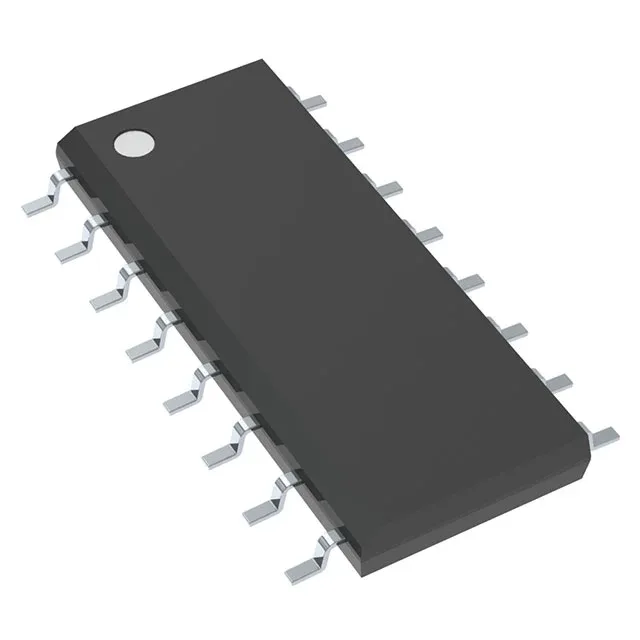
Device identity and logic family
The SN74AHCT367D is a dual non-inverting buffer with 3-state outputs from TI's 74AHCT series, a 5V-tolerant high-speed CMOS logic family that offers a direct drop-in for legacy 74LS and 74HCT designs while cutting quiescent power. It integrates two buffer elements: one 2-bit and one 4-bit (hex) section, giving a total of six buffered channels in a single 16-SOIC package. The 3-state output control lets you isolate the buffer from the bus when the output-enable line is deasserted, which is standard for shared data lines or bidirectional bus architectures.
That extended range also means it's a candidate for military ground-support gear that needs to survive desert storage and arctic operation.
Output drive and bus interface
Each output can sink or source 8mA, which is typical for a 74AHCT buffer driving standard CMOS logic inputs or a single TTL load. If you need to drive a heavier fan-out — say, eight LS TTL inputs or a long backplane trace — you'll want to buffer the output through a line driver with higher current capacity. The 3-state outputs are the key feature for shared bus applications: when the output-enable is inactive, the outputs go high-impedance, letting another device drive the same bus lines without contention. That's the same behaviour as the 74LS367 and 74HCT367, so it's a direct functional replacement for those older parts in bus-oriented designs.
The narrow SOIC body saves board area compared to the wider SOIC-16 (7.5 mm) or DIP-16 through-hole alternatives. No exposed thermal pad here — the 8mA per output keeps junction temperatures low enough that the SOIC's modest copper area on the PCB is sufficient for heat sinking in still air.
The 74AHCT series has broad second-sourcing from multiple manufacturers (NXP, ON Semiconductor, STMicroelectronics all make pin-compatible 74AHCT367 variants), so supply risk is low even if TI's own production tightens.