Package — 20-TSSOP, tape and reel
The tape-and-reel option (TR) suits automated pick-and-place assembly; cut-tape (CT) is also available for prototyping. No thermal pad — standard TSSOP land pattern applies.
ROHS3 compliant.
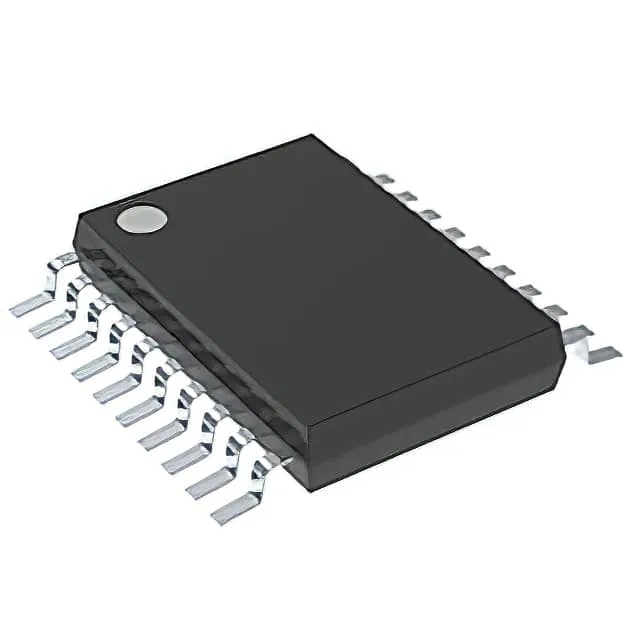
Texas Instruments 74AHC series SN74AHC245PWR, 8-bit non-inverting transceiver, 3-state outputs, 2V–5.5V supply, 8mA drive, 20-TSSOP, -40°C to 125°C.
| Parameter | Value |
|---|---|
| Series | 74AHC |
| Logic type | Transceiver, Non-Inverting |
| Output type | 3-State |
| Mounting | Surface Mount |
| Supply voltage | 2V ~ 5.5V |
| Current - output high, low | 8mA, 8mA |
| Operating temperature | -40°C ~ 125°C (TA) |
| Package | Tape & Reel (TR); Cut Tape (CT) |
| Case | 20-TSSOP (0.173\", 4.40mm Width) |
| Number of elements | 1 |
| Number of bits per element | 8 |
The tape-and-reel option (TR) suits automated pick-and-place assembly; cut-tape (CT) is also available for prototyping. No thermal pad — standard TSSOP land pattern applies.
ROHS3 compliant.
The SN74AHCT245 is a TTL-compatible version of the same function. It has tighter input thresholds (0.8 V / 2.0 V) for interfacing with TTL logic, while the AHC variant uses CMOS thresholds (0.9 V / 3.15 V at 5 V). Supply range and drive are similar.
Yes. The supply range is 2 V to 5.5 V, so 3.3 V is well within the operating window. Propagation delay will be slightly higher than at 5 V, but the part is fully characterised at 3.3 V.