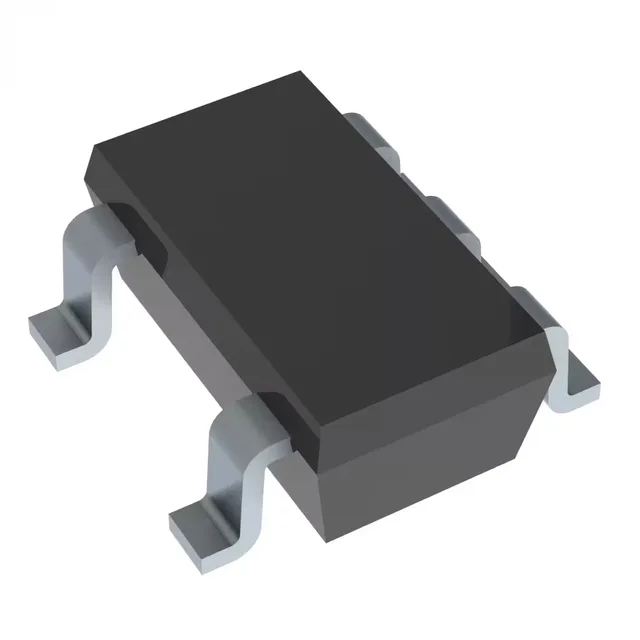
Single-gate buffer with 3-state output — 2V to 5.5V supply
The Texas Instruments SN74AHC1G125DBVT is a single-gate, non-inverting buffer from the 74AHC series, with a 3-state output that lets you disconnect the output from the bus when the output-enable pin is driven high. It operates across a supply range of 2V to 5.5V, making it compatible with both 3.3V and 5V logic families without a level translator in many cases. The output can sink or source 8mA at the rated supply voltage, which is enough to drive a standard CMOS input, an LED indicator, or a low-power relay coil through a transistor.
What the 8mA output drive means for your load
The 8mA output high and low current is symmetric, so the buffer can both source and sink the same current. For a typical 3.3V CMOS input with a few pF of load, 8mA is plenty. If you are driving a longer trace or a bus with multiple receivers, the 3-state output lets you float the line when the buffer is disabled, avoiding contention on shared data lines. The drive strength is specified across the full 2V to 5.5V supply range, so at 2V the output current will be lower than at 5V — but the 8mA figure is the rated minimum at the rated supply, so you have guaranteed headroom for the load you connect.
The 125°C upper limit means it can sit next to a hot processor or power stage without derating. The 74AHC series uses CMOS technology, so quiescent current is low — microamps — which matters in battery-powered or always-on subsystems.