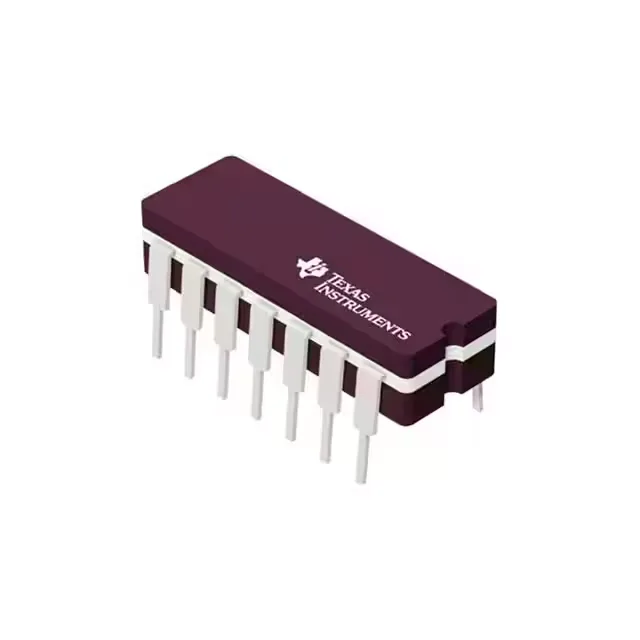
210 MHz clock ceiling in a 14-DIP through-hole package
The SN74ACT74N is a dual D-type flip-flop from the 74ACT family, each flip-flop holding one bit with set (preset) and reset inputs. The positive-edge trigger and complementary outputs make it a direct drop-in for breadboard or legacy through-hole designs that need a clean divide-by-two or data-register stage. Rated clock frequency hits 210 MHz, which is high for a through-hole DIP — the 14-DIP (0.300-inch, 7.62 mm pitch) footprint introduces parasitic inductance and capacitance that limit the practical toggle rate in a socketed prototype, but on a soldered board with short traces the 210 MHz ceiling is real. The max propagation delay is 11 ns at 5 V and 50 pF load, so the output settles within one 4.76 ns clock period at 210 MHz, leaving roughly 6 ns of setup-and-hold margin for the downstream stage.
Supply rails and quiescent draw
Quiescent current is just 2 µA, so the flip-flop's own draw is negligible in a mixed-signal board where the 5 V rail also powers an ADC or op-amp. The input capacitance is 3 pF per input, which keeps the AC loading on the driving gate low. Output drive capability is 24 mA source and 24 mA sink at the rated supply voltage.
Industrial temperature grade and through-hole integration
The 14-PDIP package (supplier device package 14-PDIP) is the same 0.300-inch-wide DIP used since the 1970s, so existing PCB footprints and sockets accept it without a layout change. The tube packaging (50 per tube typical for 14-DIP) is standard for through-hole assembly lines that feed auto-insertion or hand-load stations.