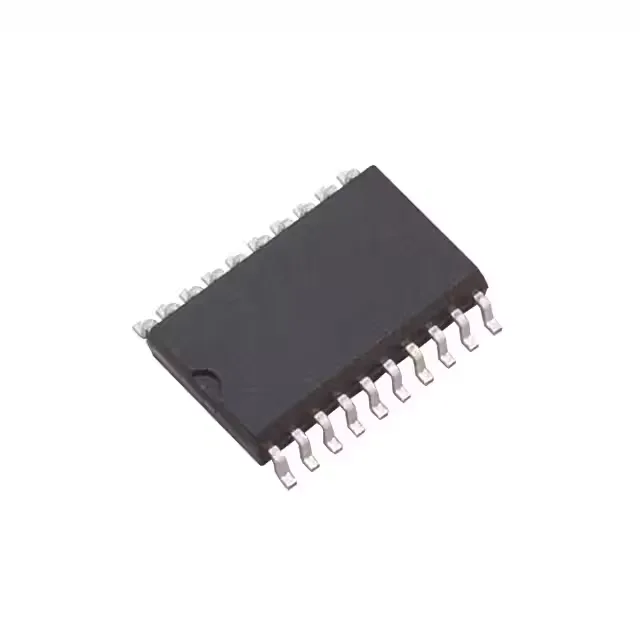
What this 74AC flip-flop does on the board
The SN74AC564DW: It takes in eight bits on the D inputs and latches them to the Q outputs in inverted form through a tri-state bus — the kind of buffer you reach for when the data bus needs to float on command and the logic polarity flips between stages.
Clock speed, propagation delay, and drive — what the numbers mean for your timing budget
95 MHz clock frequency sets the maximum toggle rate — above that the setup/hold window closes and the output stops tracking the input reliably. Output drive is 24 mA source and sink — enough to light a small LED or drive a few CMOS inputs without a buffer, but not enough for a relay coil or a long twisted-pair run. Quiescent current sits at 4 µA, so the chip draws almost nothing when the clock is stopped and the outputs are static. Input capacitance is 4.5 pF per pin — factor that into the clock tree loading if you are running a high-speed bus with multiple loads on the same trace.
Active production and compliance — what the procurement desk needs
No lead-time number to share here — drop a quote request and we will come back with a date.