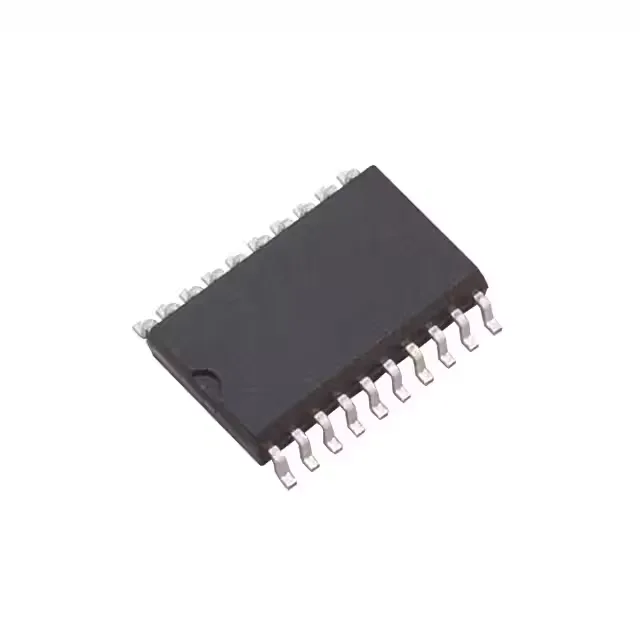
Texas Instruments SN74AC240DWR — Logic ICs

SN74AC240DWR 74AC Octal Inverting Buffer, 2V-6V, 20-SOIC

MPNSN74AC240DWR
End of Life

Texas Instruments 74AC series Buffer, Inverting, 2 Element, 4 Bit per Element, 3-State Output, 24mA, 2V to 6V, 20-SOIC, -40°C to 85°C.

$0.89Ref. price · indicative, final on quote
Packaging20-SOIC (0.295", 7.50mm Width)
RoHSROHS3 Compliant
Series74AC
Independent supplier — new & surplus stockAuthenticity-screened · ESD-safe packingListing updated Aug 2026

Specifications

SN74AC240DWR specifications
ParameterValue
Series74AC
Logic typeBuffer, Inverting
Output type3-State
MountingSurface Mount
Supply voltage2V ~ 6V
Current - output high, low24mA, 24mA
Operating temperature-40°C ~ 85°C (TA)
PackageTape & Reel (TR); Cut Tape (CT)
Case20-SOIC (0.295\", 7.50mm Width)
Number of elements2
Number of bits per element4

Product details

Supply range and drive capability — what the 2V–6V and 24mA ratings mean

The SN74AC240DWR: The 2V to 6V supply span means this buffer works directly with 3.3V and 5V logic families without an external level shifter. The symmetrical 24mA output drive (both high and low) is enough to fan out to ten standard LSTTL loads or drive a short ribbon cable, but not intended for heavy capacitive loads like long backplanes.

The 74AC family's CMOS inputs have good noise immunity across this range, though the 3-state outputs need pull-up or pull-down resistors on the enable lines if the bus floats during power sequencing.

The ROHS3 rating covers the full substance restriction list, so it qualifies for new designs targeting EU and global markets without exemption tracking.

Frequently asked questions

Is SN74AC240DWR compatible with 5V logic?

Yes, the 2V to 6V supply range includes 5V operation. At 5V the AC family's input thresholds are TTL-compatible, so it interfaces directly with 5V LSTTL and CMOS logic families.

What is the difference between SN74AC240DWR and SN74AC240N?

The SN74AC240N is the through-hole PDIP-20 package. Electrically they are identical; the choice is driven by assembly process — reflow soldering versus wave or hand-solder.