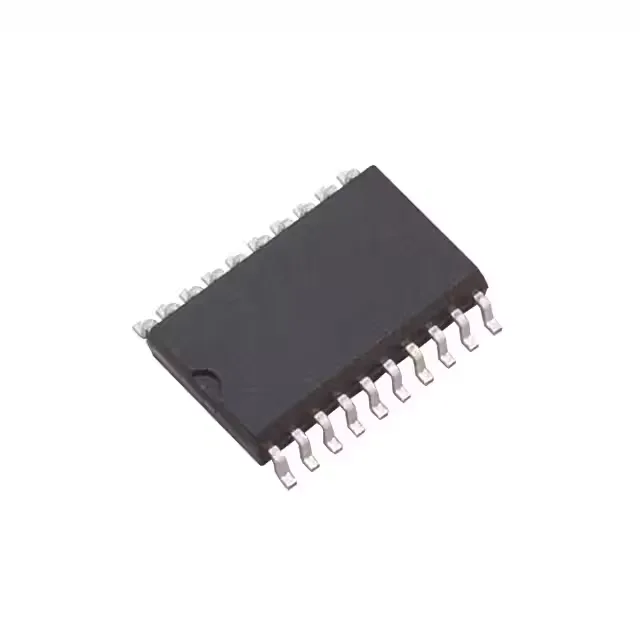
Texas Instruments SN74ABT245BDW — Analog & Data Acquisition

SN74ABT245BDW 74ABT Transceiver, 5V 20-SOIC, Active

MPNSN74ABT245BDW
End of Life

TI SN74ABT245BDW, 74ABT series, 8-bit non-inverting transceiver with 3-state outputs, 4.5V to 5.5V supply, 32mA source / 64mA sink, -40°C to 85°C, 20-SOIC wide body.

$1.22Ref. price · indicative, final on quote
Packaging20-SOIC (0.295", 7.50mm Width)
StockContact for availability
MOQ1 pcs
  • 100% new & originalTraceable channels only — no refurbs, no pulls, no remarked parts.
  • Date & lot codes on quoteStated per line before you commit; label photos on request.
  • MSL-compliant ESD packingMoisture-sealed bags with indicator cards; reels photo-verified.
  • PayPal buyer protectionPay by T/T, PayPal or Payoneer — card payments covered end to end.

Specifications

SN74ABT245BDW Technical Specifications
ParameterValue
Series74ABT
Logic typeTransceiver, Non-Inverting
Output type3-State
Mounting typeSurface Mount
Voltage4.5V ~ 5.5V
Current - output high, low32mA, 64mA
Operating temperature-40°C ~ 85°C (TA)
PackageTube
Case20-SOIC (0.295\", 7.50mm Width)
Number of elements1
Number of bits per element8

Product details

What this 74ABT transceiver is and where it fits

The TI SN74ABT245BDW is an 8-bit non-inverting bus transceiver from the 74ABT family, packing a single 8-bit element with 3-state outputs in a 20-SOIC wide-body package. It runs on a 4.5V to 5.5V supply rail — strictly 5V logic territory — and delivers 32mA source, 64mA sink per output. That sink current is the headline number: it can drive heavily loaded parallel buses, backplane traces, or multiple CMOS inputs without sagging the logic levels. The -40°C to 85°C industrial temperature range covers factory-floor automation, outdoor telecom cabinets, and unheated equipment rooms. If your BOM already runs 5V logic and needs a bidirectional bus buffer that can handle a long trace or a fan-out of ten loads, this is the part.

5V-only supply — compatibility check for mixed-voltage boards

The SN74ABT245BDW operates from 4.5V to 5.5V only. It is not a 3.3V-tolerant part — feeding 3.3V into the VCC pin will not meet the minimum supply and the outputs will not swing to valid CMOS levels. If your board has a 3.3V bus on the other side, you need a level-shifting transceiver like the 74LVC245 or 74AVC family. For pure 5V systems, the ABT245 gives you the drive strength that the lower-voltage families cannot match.

Output drive — 64mA sink for heavy bus loads

The 64mA low-level output current is the spec that matters when you are driving a backplane or a memory bus with multiple stubs. Each output can sink 64mA while staying within VOL limits — that is enough to drive a 50-ohm terminated line or a bank of eight LSTTL inputs. The 32mA source side is more modest but still double what a standard 74HC part delivers. If your bus has long traces or many loads, this part keeps the noise margin intact.

Lifecycle and supply posture

TI lists the SN74ABT245BDW as Active with ROHS3 compliance. No end-of-life notice, no last-time-buy pressure. It is a current-production part available through the standard TI distribution channel. For a BOM line that needs a 5V bus transceiver, this is a low-risk, long-availability choice.

Frequently asked questions

Is SN74ABT245BDW RoHS compliant?

Yes, the SN74ABT245BDW is ROHS3 compliant, covering all six restricted substances plus the four phthalates. No exemption issues for EU or California markets.

Is SN74ABT245BDW compatible with 3.3V logic?

No. The SN74ABT245BDW requires a 4.5V to 5.5V supply and its inputs and outputs are 5V logic levels. Driving it with 3.3V signals will not meet the VIH minimum, and its 5V outputs will overstress 3.3V inputs on the receiving side. Use a 74LVC245 or 74AVC family part for mixed-voltage interfaces.

How does SN74ABT245BDW compare to 74LVC245?

The 74LVC245 runs on 1.65V to 3.6V and is 5V-tolerant on inputs, making it the choice for mixed-voltage boards. The SN74ABT245BDW is strictly 5V-only but delivers significantly higher output drive — 64mA sink versus 24mA typical for the LVC245. If your design is all 5V and needs the bus drive, the ABT wins. If you need 3.3V operation or level translation, pick the LVC.