What this 74ABT bus buffer does on a 5V rail
Each of the two elements buffers four bits, giving eight total channels, with a rated output drive of 32mA source and 12mA sink per output. The 3-state outputs let you disconnect the buffer from a shared data bus when the output-enable pins are deasserted, which is the standard arrangement for memory-address or peripheral-data buses on a 5V backplane.
Industrial temperature range and the 20-SOIC wide-body footprint
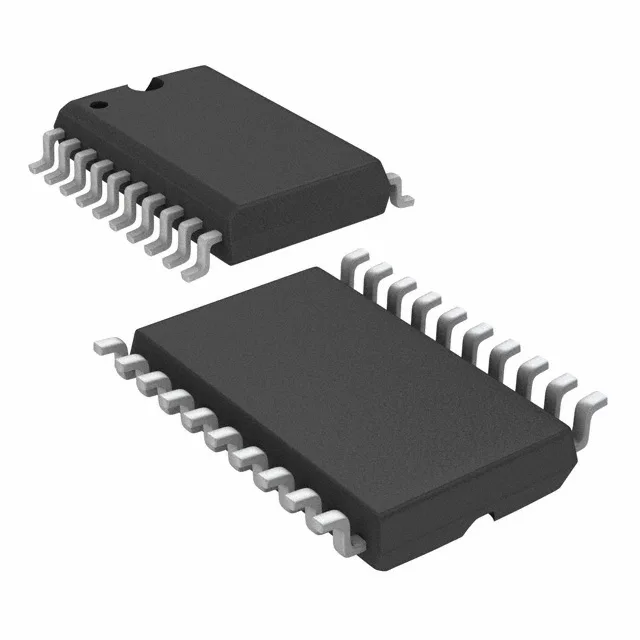
The package is a 20-SOIC with a 7.50mm body width, the wide-body variant. If your existing PCB layout uses the narrower 3.9mm SOIC footprint, this part will not fit without a board respin. The wide body also means the pin pitch is the standard 1.27mm, but the extra width gives better creepage distance for high-voltage adjacent traces on the same board.
The 74ABT series has been in production for decades, and TI continues to support it for industrial and telecom customers who have not migrated to lower-voltage logic families.
For a buyer filling a BOM line, the key fit criteria are the 5V-only supply rail, the 20-SOIC wide-body footprint, and the industrial temperature grade. If your design already uses a 3.3V or mixed-voltage bus, this buffer will not work without a level translator. The 32mA/12mA asymmetric drive is typical for 5V TTL-compatible bus buffering — adequate for driving a few CMOS loads or a short backplane trace, but not sized for high-capacitance cables.