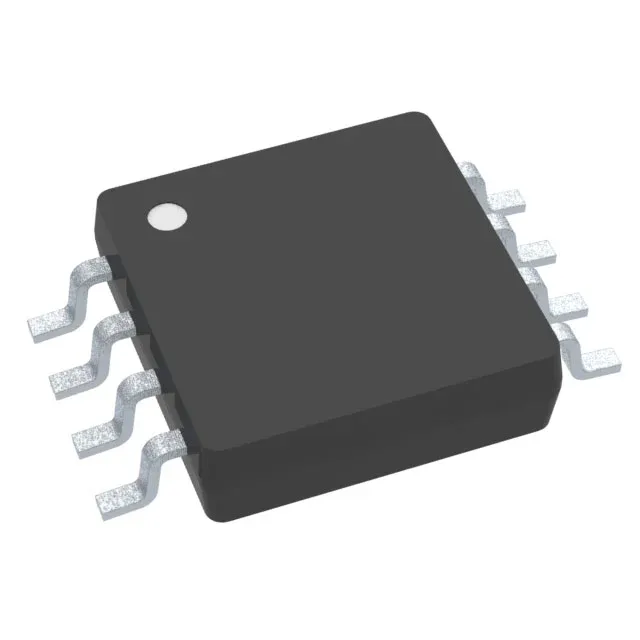
It takes two single-ended CMOS/LVTTL inputs and converts each to a differential LVDS output pair, delivering up to 400 Mbps per channel. That data rate suits it for high-speed serial links like clock distribution, backplane interconnects, or camera-sensor interfaces where common-mode noise rejection matters. Packaged in an 8-VSSOP (also listed as 8-TSSOP or 8-MSOP, 0.118-inch body width), the footprint is compact enough for dense PCB layouts but still hand-solderable with a fine tip. The 2/0 driver/receiver count tells you this is a pure driver — no receiver on-chip, so pair it with an LVDS receiver like the SN65LVDS9637 for a complete link.
400 Mbps — what that means for signal integrity
At 400 Mbps, the fundamental frequency is 200 MHz, and the 3rd harmonic hits 600 MHz. That means PCB trace length should be kept under about 6 inches on standard FR-4 before you need to worry about reflections. The LVDS differential swing is typically 350 mV, so the receiver threshold is tight — keep the differential impedance at 100 Ω and route the pair tightly coupled.