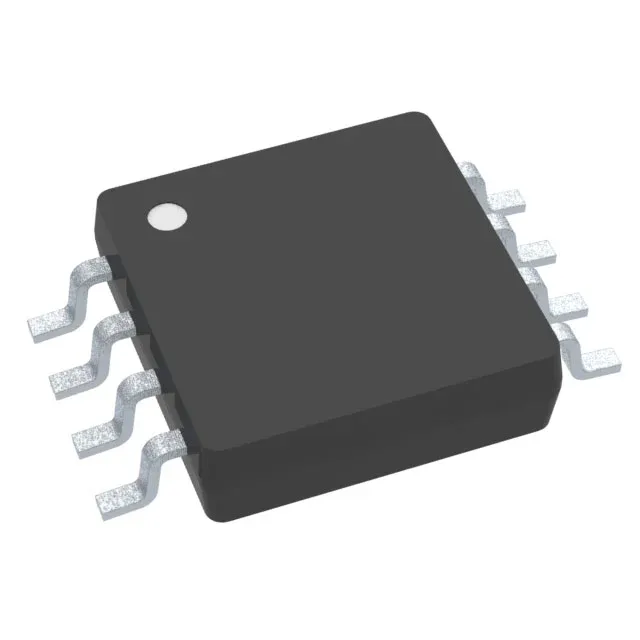
Texas Instruments SN65LVDS9637DGKRG4 — Interface & Transceivers

SN65LVDS9637DGKRG4 LVDS Receiver, 150 Mbps, 8-VSSOP

MPNSN65LVDS9637DGKRG4
End of Life

Texas Instruments 65LVDS series, SN65LVDS9637DGKRG4, LVDS Receiver, 150Mbps, 0/2 Drivers/Receivers, 3V ~ 3.6V, -40°C ~ 85°C, Surface Mount, 8-VSSOP.

$2.7700Ref. price · indicative, final on quote
Independent supplier — new & surplus stockAuthenticity-screened · ESD-safe packingListing updated Aug 2026

Specifications

SN65LVDS9637DGKRG4 specifications
ParameterValue
TypeReceiver
Series65LVDS
MountingSurface Mount
Supply voltage3V ~ 3.6V
ProtocolLVDS
Operating temperature-40°C ~ 85°C
PackageTape & Reel (TR)
Data rate150Mbps
Case8-TSSOP, 8-MSOP (0.118\", 3.00mm Width)
Number of drivers (Receivers)0/2

Product details

A 150 Mbps per-channel data rate supports LVDS signaling for parallel-to-serial conversions, serializer-deserializer (SerDes) links, and high-speed ADC output capture. At this rate, the receiver's input threshold and hysteresis margin become critical for maintaining signal integrity over twisted-pair or PCB traces longer than a few inches. The part's LVDS common-mode range (typically 0V to 2.4V) allows it to tolerate ground shifts between driver and receiver, which is common in multi-board or cable-connected systems.

Package and layout: 8-VSSOP with 0.65 mm pitch

Supply decoupling should follow typical LVDS practice: a 0.1 µF ceramic capacitor close to each supply pin, with a bulk 10 µF capacitor nearby on the 3.3V rail.

Frequently asked questions

What is the data rate of SN65LVDS9637DGKRG4?

The receiver supports a data rate of 150 Mbps per channel. This is the maximum rate at which the LVDS input can reliably recover the differential signal and drive the CMOS output.

Is SN65LVDS9637DGKRG4 equivalent to SN65LVDS9637D?

The SN65LVDS9637D is the same dual LVDS receiver in a different package (8-SOIC). The DGKRG4 variant uses the smaller 8-VSSOP package. Functionally they are equivalent, but the footprint differs — verify PCB land pattern compatibility before substituting.