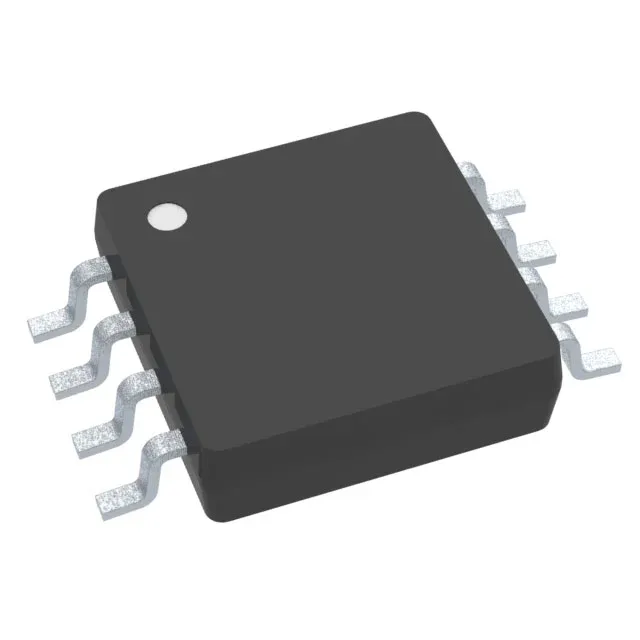
Texas Instruments SN65LVDS9637DGKR — Interface & Transceivers

SN65LVDS9637DGKR LVDS Receiver, 150 Mbps, 8-VSSOP

MPNSN65LVDS9637DGKR
Active

Texas Instruments 65LVDS series SN65LVDS9637DGKR LVDS receiver, 0/2 drivers/receivers, 150Mbps data rate, 3V~3.6V supply, -40°C~85°C, 8-VSSOP package.

$2.9100Ref. price · indicative, final on quote
Packaging8-TSSOP, 8-MSOP (0.118", 3.00mm Width)
RoHSROHS3 Compliant
Series65LVDS
Independent supplier — new & surplus stockAuthenticity-screened · ESD-safe packingListing updated Aug 2026

Specifications

SN65LVDS9637DGKR specifications
ParameterValue
TypeReceiver
Series65LVDS
MountingSurface Mount
Supply voltage3V ~ 3.6V
ProtocolLVDS
Operating temperature-40°C~85°C
PackageTape & Reel (TR); Cut Tape (CT)
Data rate150Mbps
Case8-TSSOP, 8-MSOP (0.118\", 3.00mm Width)
Number of drivers (Receivers)0/2

Product details

If your board has a tight 3.0V rail from a battery or a 3.6V switcher, it still lands inside the window.

150 Mbps — sizing the serial link budget

At 150 Mbps per channel, this receiver handles common LVDS clock rates for 24-bit colour video at 60 Hz over a single pair, or multiple aggregated sensor streams. The 150 Mbps ceiling is the raw bit rate the receiver can recover; your actual throughput depends on encoding overhead and cable length. For shorter runs inside a chassis (<1 meter), you get clean eye margins at full speed. For longer cables, budget some margin — the receiver itself is not the bottleneck at typical industrial distances.

Package and orientation — field-swap note

Frequently asked questions

Is SN65LVDS9637DGKR compatible with 3.3V logic?

Yes. The LVDS input common-mode range and the single-ended CMOS output levels are designed for 3.3V logic families.

What is the difference between SN65LVDS9637DGKR and SN65LVDS9637DR?

The difference is package: SN65LVDS9637DGKR comes in an 8-VSSOP (also called 8-MSOP or VSSOP-8), while SN65LVDS9637DR is in an 8-SOIC. The VSSOP package is about half the board footprint of the SOIC. Electrically they are identical — same 150 Mbps data rate, same 3V to 3.6V supply, same dual receiver function. The choice is driven by board area and assembly line compatibility.