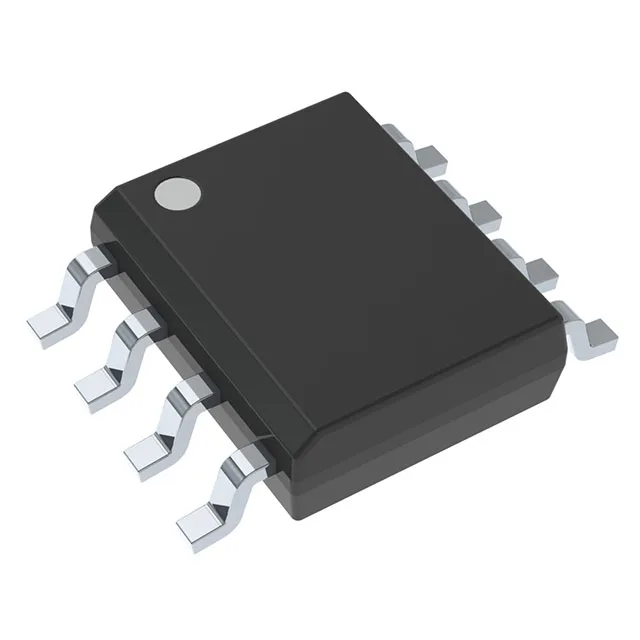
The 400 Mbps data rate is the per-channel limit for NRZ signalling. In practice, that gives you a 200 MHz clock-equivalent edge rate, so keep the stub length under an inch and use a proper 100 Ω termination resistor right at the receiver input pins. The 50 mV of hysteresis is a real help on backplane or cable links where common-mode noise from adjacent switching supplies can push the differential signal around — it prevents the output from chattering when the input sits near the threshold. If your link runs at lower speeds (say 100 Mbps or below) over a few metres of twisted pair, the hysteresis alone may let you skip a separate line equaliser.
The base product number 65LVDS9637 covers the whole family, so if you ever need to cross to a different package variant or temperature grade, the datasheet covers the options under that same base number.
Sourcing this part for a production run
This is a current-production TI part with broad distribution coverage.