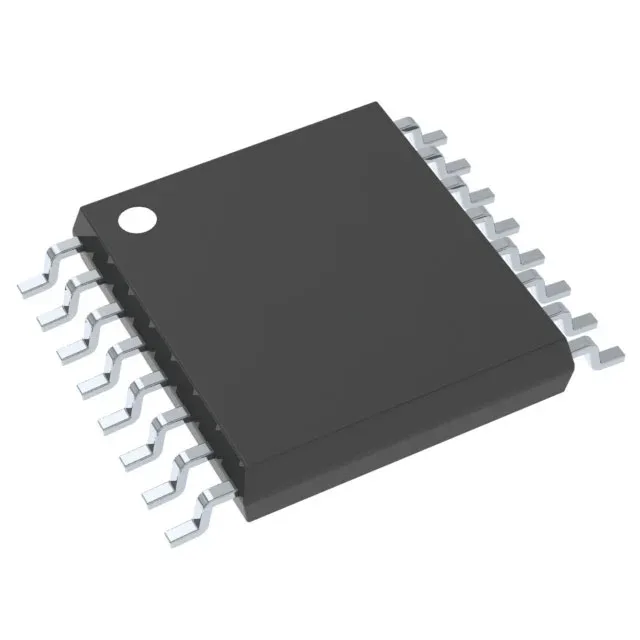
Texas Instruments SN65LVDS349PWR — Interface & Transceivers

SN65LVDS349PWR LVDS Receiver, 560 Mbps, 16-TSSOP

MPNSN65LVDS349PWR
Active

Texas Instruments 65LVDS series, Type Receiver, LVDS protocol, 560Mbps data rate, 0/4 drivers/receivers, 50 mV hysteresis, 3V ~ 3.6V supply, -40°C ~ 85°C operating temperature, Surface Mount, 16-TSSOP package.

$5.1995Ref. price · indicative, final on quote
Independent supplier — new & surplus stockAuthenticity-screened · ESD-safe packingListing updated Aug 2026

Specifications

SN65LVDS349PWR specifications
ParameterValue
TypeReceiver
Series65LVDS
MountingSurface Mount
Supply voltage3V ~ 3.6V
ProtocolLVDS
Operating temperature-40°C ~ 85°C
PackageTape & Reel (TR) Cut Tape (CT)
Data rate560Mbps
Case16-TSSOP (0.173\", 4.40mm Width)
Receiver hysteresis50 mV
Number of drivers (Receivers)0/4

Product details

Quad LVDS receiver for high-speed backplane and cable links

The Texas Instruments SN65LVDS349PWR is a quad-channel LVDS receiver in the 65LVDS family, accepting four differential LVDS inputs and delivering four single-ended LVTTL/LVCMOS outputs. Each channel handles data rates up to 560 Mbps, making it suited for high-speed serial interconnects in telecom backplanes, base station clock distribution, and video data links. The 50 mV of built-in receiver hysteresis filters noise on long or poorly terminated traces without external components. The 16-TSSOP package (4.40 mm width) is a compact surface-mount footprint suited for dense PCB layouts.

Supply rail and signal integrity

The 50 mV hysteresis provides noise margin on backplane traces. The 0/4 driver/receiver count confirms this is a pure receiver.

Frequently asked questions

Is SN65LVDS349PWR compatible with 3.3 V systems?

Yes. The LVDS inputs and LVTTL/LVCMOS outputs are compatible with 3.3 V logic levels.

What is the difference between SN65LVDS349PWR and SN65LVDS349PW?

The two parts are electrically identical. The PWR suffix indicates Tape & Reel packaging; the PW suffix indicates tube packaging. Both use the same 16-TSSOP package and carry the same specifications.