Obsolete — the sourcing picture
That means TI has stopped production, and the standard authorized-distributor channel no longer carries fresh factory stock. Any units in the supply chain are last-time-buy remnants or surplus inventory that has been sitting in broker or independent-distributor warehouses. The date-code spread on available parts can be wide — you may see anything from a year-old lot to a five-year-old reel. There is no official direct replacement from TI carrying the same base number; the SN65LVDS348DRG4 is the end of that particular order-code branch.
What the 560 Mbps and 50 mV hysteresis mean for the link
This is a quad LVDS receiver — four independent channels that convert differential LVDS input signals to single-ended CMOS/TTL outputs. The 560 Mbps per-channel data rate is the maximum switching speed the receiver can sustain under specified conditions; in practice, a backplane or cable link running at 400–500 Mbps leaves enough timing margin for the 50 mV of built-in receiver hysteresis. That hysteresis is the key feature for noisy environments: it prevents the output from chattering when the differential input sits near the switching threshold, which matters on long cable runs or in industrial-floor wiring where common-mode noise couples into the pair.
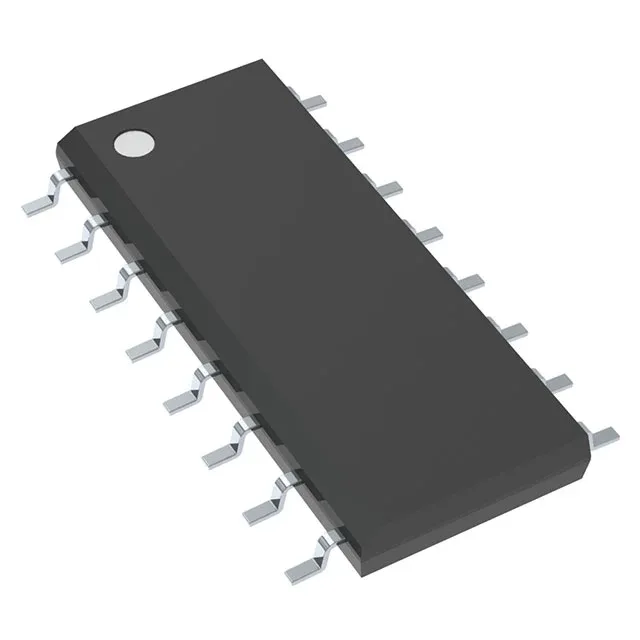
The footprint is standard SOIC-16, which is a common, easy-to-layout surface-mount package. No thermal pad, no exposed paddle — just a straightforward reflow profile. The package is not the issue; the issue is finding genuine parts with clean date-code consistency across the reel.