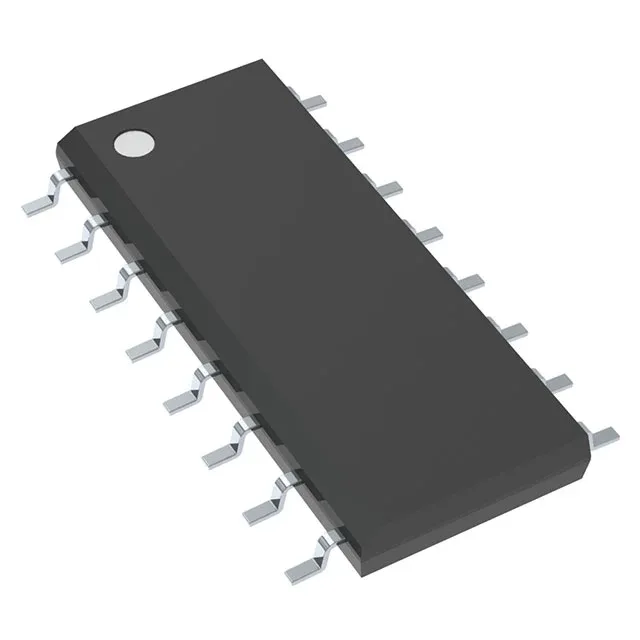
Texas Instruments SN65LVDS33DR — Interface & Transceivers

SN65LVDS33DR LVDS Receiver, 400 Mbps, 16-SOIC

MPNSN65LVDS33DR
Active

Texas Instruments 65LVDS series SN65LVDS33DR, Receiver, 0/4 drivers/receivers, LVDS protocol, 400Mbps data rate, 3V ~ 3.6V supply, -40°C~85°C, 16-SOIC package.

$3.0000Ref. price · indicative, final on quote
Packaging16-SOIC (0.154", 3.90mm Width)
RoHSROHS3 Compliant
Series65LVDS
Independent supplier — new & surplus stockAuthenticity-screened · ESD-safe packingListing updated Aug 2026

Specifications

SN65LVDS33DR specifications
ParameterValue
TypeReceiver
Series65LVDS
MountingSurface Mount
Supply voltage3V ~ 3.6V
ProtocolLVDS
Operating temperature-40°C~85°C
PackageTape & Reel (TR); Cut Tape (CT)
Data rate400Mbps
Case16-SOIC (0.154\", 3.90mm Width)
Receiver hysteresis50 mV
Number of drivers (Receivers)0/4

Product details

Quad LVDS receiver for 400 Mbps serial links

The Texas Instruments SN65LVDS33DR is a quad-channel LVDS receiver designed for high-speed differential signaling at 400 Mbps per channel. It accepts low-voltage differential signals and converts them to 3.3 V CMOS levels, with 50 mV of built-in hysteresis to reject noise on long backplane traces or cables.

For a production BOM this removes the supply-risk flag that obsolete or NRND parts carry.

No special baking or handling beyond MSL 1/2/3 typical for SOIC—check the reel label for the specific moisture sensitivity level.

40 µA typical quiescent – power budget note

For a backplane with all four channels active at full rate, budget around 25 mA typical per the family datasheet (not shown in this brief listing). The 50 mV hysteresis helps maintain clean edges on lossy FR-4 traces without external termination tweaks.

Frequently asked questions

Is SN65LVDS33DR compatible with a 5 V supply?

No. Connecting to a 5 V rail will damage the device.

What is the difference between SN65LVDS33DR and SN65LVDS33D?

The SN65LVDS33DR is the Tape & Reel packaged variant of the SN65LVDS33D, which ships in tubes. Electrically and functionally they are identical; the only difference is the shipping medium, which affects pick-and-place feeding.