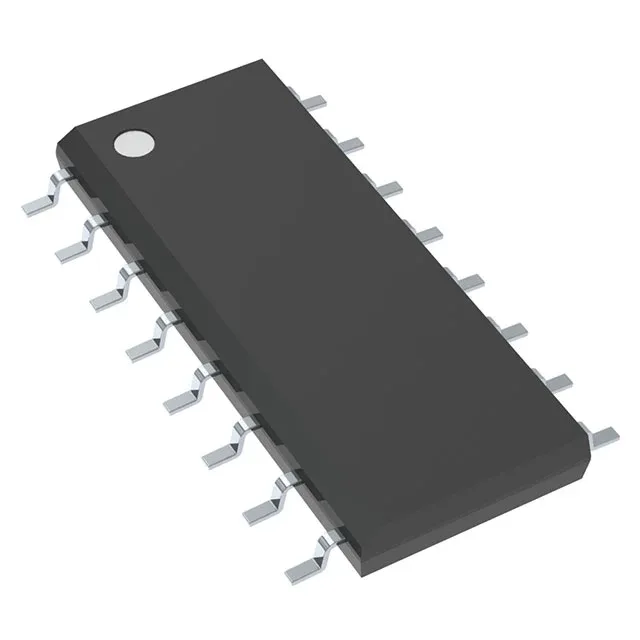
Texas Instruments SN65LVDS32DR — Interface & Transceivers

SN65LVDS32DR LVDS Receiver, 400 Mbps, 16-SOIC, Active

MPNSN65LVDS32DR
Active

Texas Instruments 65LVDS series LVDS receiver, SN65LVDS32DR, 400 Mbps data rate, 0/4 drivers/receivers, 50 mV hysteresis, 3V–3.6V supply, -40°C to 85°C, 16-SOIC package.

$3.3400Ref. price · indicative, final on quote
Packaging16-SOIC (0.154", 3.90mm Width)
RoHSROHS3 Compliant
Series65LVDS
Independent supplier — new & surplus stockAuthenticity-screened · ESD-safe packingListing updated Aug 2026

Specifications

SN65LVDS32DR specifications
ParameterValue
TypeReceiver
Series65LVDS
MountingSurface Mount
Supply voltage3V ~ 3.6V
ProtocolLVDS
Operating temperature-40°C~85°C
PackageTape & Reel (TR); Cut Tape (CT)
Data rate400Mbps
Case16-SOIC (0.154\", 3.90mm Width)
Receiver hysteresis50 mV
Number of drivers (Receivers)0/4

Product details

LVDS receiver with 400 Mbps per channel

The SN65LVDS32DR is a quad LVDS receiver from TI's 65LVDS family, converting differential LVDS signals into single-ended CMOS outputs at up to 400 Mbps per channel. Four receivers in a single 16-SOIC package — one part handles a full 4-lane link. The 50 mV of receiver hysteresis rejects noise on long cable runs or backplane traces — a common pain point when the LVDS pair picks up crosstalk from adjacent high-speed lines.

Industrial temperature range and active lifecycle

ROHS3 compliant — no restricted-substance exemptions to track. Sourced through authorized and independent distribution; lead time and pricing confirmed at RFQ.

Package and board-fit for the 16-SOIC

The supply voltage tolerance (3V–3.6V) means decoupling is straightforward: a 0.1 µF cap near each supply pin handles the switching noise from the CMOS output edges.

Frequently asked questions

What is the data rate of the SN65LVDS32DR?

Each receiver channel handles up to 400 Mbps. That is the per-channel throughput; all four channels can run simultaneously at that rate.

What supply voltage does the SN65LVDS32DR need?

3V to 3.6V — typically a 3.3V rail. The 50 mV hysteresis helps maintain signal integrity when the input has noise or slow edges.