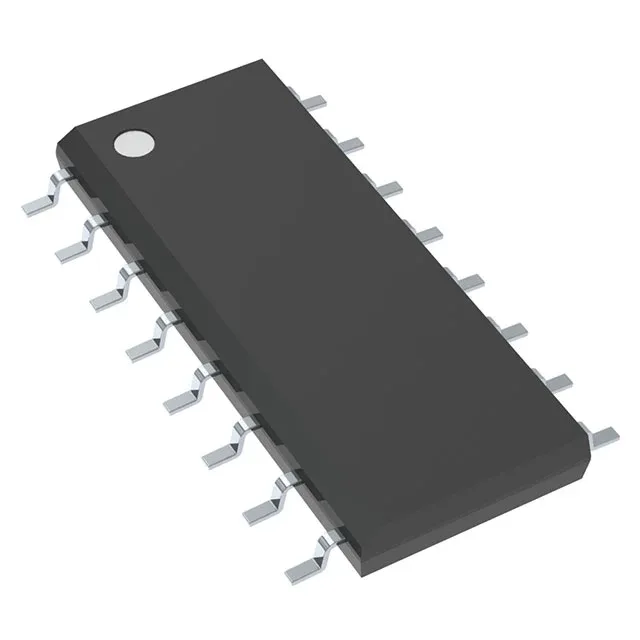
It handles a 400 Mbps data rate per channel, which is enough for Camera Link base configurations, display interfaces, and backplane clock distribution up to several meters of twisted-pair cabling. The 50 mV of built-in hysteresis cleans up marginal differential signals — useful when the cable run picks up common-mode noise or the driver is running near its minimum swing.
Industrial temperature range and active production — no LTB worry for current builds
Footprint and supply — 16-SOIC body, single 3.3V rail
The 16-SOIC (3.90 mm width) footprint is a common land pattern shared with many TI and competitor quad LVDS receivers, so a board layout for the SN65LVDS32BDR can often reuse an existing copper pattern. Decouple each receiver pair with a 0.1 µF ceramic near the supply pins — the 3V to 3.6V range gives enough headroom for a 3.3V rail with 5% tolerance.