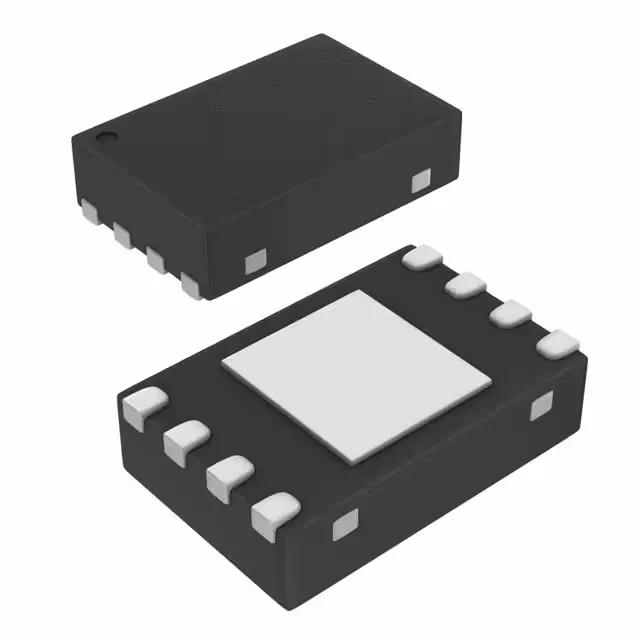
Texas Instruments SN65LVDS20DRFRG4 — Interface & Transceivers

SN65LVDS20DRFRG4 LVDS Buffer ReDriver, 4 Gbps, 8-WSON

MPNSN65LVDS20DRFRG4
End of Life

Texas Instruments SN65LVDS20DRFRG4, single-channel LVDS Buffer/ReDriver, 4 Gbps max data rate, 30 ns delay, differential input, LVDS output, 2.375 V to 3.6 V supply, -40°C to 85°C, 8-WSON (2x2 mm) package.

$58.8000Ref. price · indicative, final on quote
Independent supplier — new & surplus stockAuthenticity-screened · ESD-safe packingListing updated Aug 2026

Specifications

SN65LVDS20DRFRG4 specifications
ParameterValue
TypeBuffer, ReDriver
MountingSurface Mount
Supply voltage2.375V ~ 3.6V
Current - supply35mA
Operating temperature-40°C~85°C
InputDifferential
OutputLVDS
PackageTape & Reel (TR)
Delay time30ns
ApplicationsLVDS
Case8-WFDFN Exposed Pad
Data rate4Gbps
Channels1

Product details

4 Gbps LVDS signal conditioning in a 2x2 mm package

It's built for cleaning up signal integrity on long backplane traces, cable runs, or through connectors where the eye diagram has closed up. The 30 ns propagation delay is the price you pay for the re-drive — it's a fixed latency, so budget it in your timing closure for the serial link.

Supply rails and temperature range

The small footprint and thermal pad mean you'll want a via array under the part for both heat sinking and ground return. Surface-mount only — no through-hole option.

Frequently asked questions

Can SN65LVDS20DRFRG4 replace SN65LVDS20DRFR?

The SN65LVDS20DRFRG4 is the Tape & Reel variant of the base SN65LVDS20DRFR device. Electrically they are the same — same 4 Gbps data rate, same 30 ns delay, same supply range. The difference is only in the shipping medium; the DRFRG4 suffix indicates tape-and-reel packaging. Functionally it is a direct drop-in replacement.

Does SN65LVDS20DRFRG4 need external termination?

As an LVDS buffer/reDriver, the SN65LVDS20DRFRG4 expects a differential input and drives an LVDS output. Standard LVDS termination practice applies: the output line should be terminated with a 100 Ω resistor across the differential pair at the receiver end. The device itself does not include on-die termination for the output.