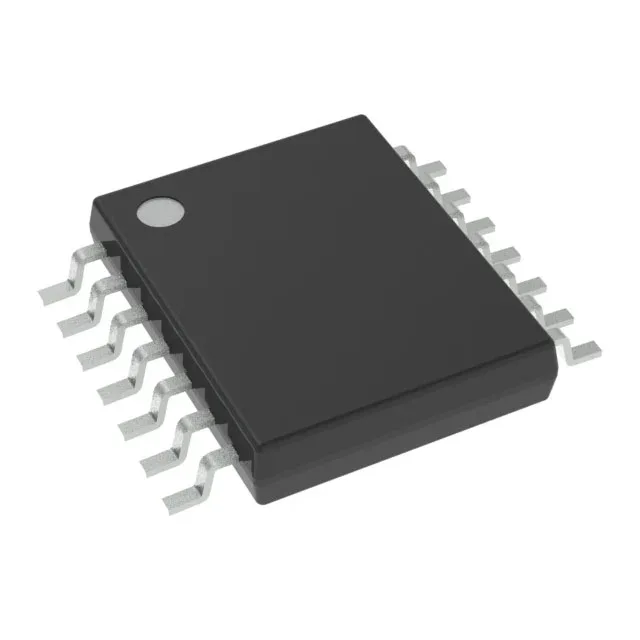
Single full-duplex LVDS transceiver for automotive serial links
It belongs to the 65LVDS family and carries AEC-Q100 automotive qualification, making it suitable for in-vehicle camera links, radar sensor interfaces, and infotainment serial buses where noise immunity and low EMI are required.
The 400 Mbps data rate is the maximum signaling speed per channel. In practice, the achievable link length depends on cable quality and termination — expect clean eye diagrams over a few meters of twisted-pair at full rate, with derating needed for longer runs or lower-cost cabling. The full-duplex architecture means the driver and receiver operate simultaneously, so a single device handles bidirectional traffic on separate differential pairs without bus-turnaround dead cycles.
The Q1 suffix in the order code specifically denotes the automotive-grade variant.
Supply rail and power considerations
The supply range of 3V to 3.6V centers on a nominal 3.3V rail. The tight tolerance means the transceiver will hold its common-mode range and output levels even with a slightly drooping supply — useful in automotive environments where the 3.3V rail may see transients from adjacent loads. Decouple with a 0.1 µF ceramic close to each supply pin, and keep the differential trace impedance at 100 Ω for proper termination.