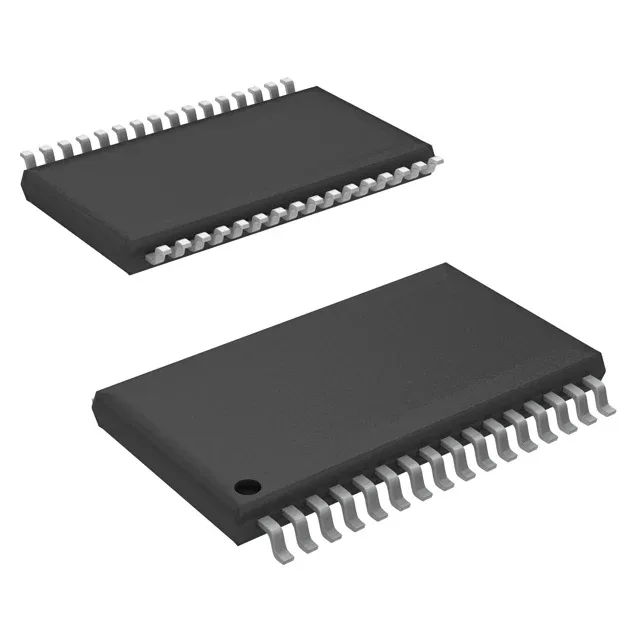
What this LVDS deserializer does on the board
The Texas Instruments SN65LVDS152DAR is an LVDS deserializer that converts a serial LVDS data stream back into parallel data. It takes up to 3 LVDS inputs and outputs 10 parallel LVDS signals, running at a maximum data rate of 200 Mbps per channel. This part is designed for point-to-point serial links where you need to reduce the number of parallel traces between boards or across a backplane — think display interfaces, camera modules, or high-speed data acquisition front-ends.
200 Mbps data rate — what it buys you
At 200 Mbps per channel, this deserializer can handle a 24-bit RGB video stream at VGA resolution (640×480 @ 60 Hz) or a 10-bit parallel bus running at 20 MHz clock. The LVDS signalling keeps the serial link low-swing and differential, which means better noise immunity over twisted-pair or ribbon cable runs up to a few meters inside a chassis. If your system needs to push data faster — say, 400 Mbps or higher — you'd step up to the SN65LVDS152's faster siblings in the same family, but for the bulk of 10-bit parallel links at moderate clock rates, this part hits the sweet spot.
The package is a 32-TSSOP with a 0.240-inch body width (6.10 mm), surface-mount. That's a fine-pitch TSSOP — 0.65 mm lead pitch typical — so your solder paste stencil and reflow profile need to be set for that geometry. MSL (moisture sensitivity level) is not listed in this record, but TSSOP packages from TI are typically MSL 1 or 3; if the reel's moisture-barrier bag is intact, you're fine. If the bag has been open, a bake at 125°C for 8 hours before reflow is the safe move.
Active lifecycle — no LTB worry
The base product number is 65LVDS152, so any future PCNs or EOL notifications will reference that base. If you need to dual-source, the SN65LVDS152D (the tube version of the same die) is the same silicon in a different shipping medium — functionally identical, just not on a reel.