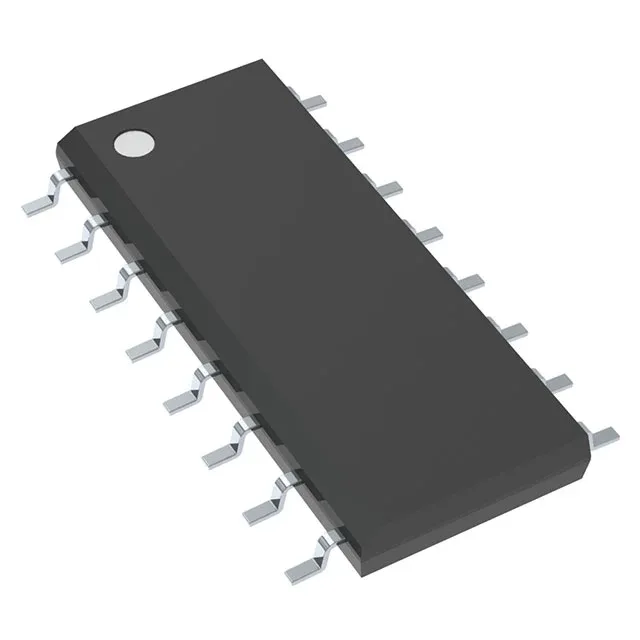
Texas Instruments SN65LVDS051DR — Interface & Transceivers

SN65LVDS051DR LVDS Transceiver, 100 Mbps, 16-SOIC

MPNSN65LVDS051DR
Active

Texas Instruments 65LVDS series LVDS transceiver, full duplex, 100 Mbps data rate, 2 drivers / 2 receivers, 3V to 3.6V supply, -40°C to 85°C, 16-SOIC surface mount package.

$2.1615Ref. price · indicative, final on quote
Independent supplier — new & surplus stockAuthenticity-screened · ESD-safe packingListing updated Aug 2026

Specifications

SN65LVDS051DR specifications
ParameterValue
TypeTransceiver
Series65LVDS
MountingSurface Mount
Supply voltage3V ~ 3.6V
ProtocolLVDS
Operating temperature-40°C~85°C
DuplexFull
PackageTape & Reel (TR)
Data rate100Mbps
Case16-SOIC (0.154\", 3.90mm Width)
Number of drivers (Receivers)2/2

Product details

LVDS signal integrity for 100 Mbps links

2/2 driver/receiver count — channel planning

With two drivers and two receivers on one chip, this transceiver handles two independent full-duplex LVDS channels. That is enough for a bidirectional clock-data pair or two separate unidirectional links, saving board area compared to using two single-channel devices. The 100 Mbps per channel rate is specified as the switching limit, so the aggregate throughput across both channels is 200 Mbps total, though each link is independently timed.

Supply rail and 3.3V system compatibility

No level shifter is needed when the local supply is 3.3V ±5%. The LVDS outputs swing about 350 mV differential, which is standard for LVDS receivers on the other end of the cable.

Place a 0.1 µF decoupling capacitor within 2 mm of each supply pin, and route the differential pairs with 100 Ω controlled impedance. No external termination resistors are required if the receiver is within a few inches on the same board; for cable runs, place a 100 Ω resistor across the receiver inputs close to the pins.

Frequently asked questions

What is the difference between SN65LVDS051DR and SN65LVDS051D?

The SN65LVDS051DR and SN65LVDS051D are electrically and functionally identical. The only difference is the shipping medium: the DR suffix indicates tape-and-reel packaging, while the D suffix is tube. Both use the same 16-SOIC package and same silicon.

Does SN65LVDS051DR require external termination resistors?

For short board-level traces (under a few inches), the LVDS receiver's internal input impedance is high enough that external termination is not needed. For longer cable runs or backplane links, place a 100 Ω resistor across the differential receiver inputs as close to the receiver pins as practical to match the characteristic impedance of the interconnect.

Is SN65LVDS051DR compatible with 5V logic?

No. Applying 5V to the VCC pin will exceed the absolute maximum rating and damage the device. The LVDS inputs and outputs are not 5V-tolerant. If your system uses a 5V supply, you need a separate 3.3V regulator for this transceiver.

What are typical applications for SN65LVDS051DR?

This transceiver is used for high-speed digital data transmission over twisted-pair or PCB traces in industrial control networks, telecom backplanes, video signal distribution, and test equipment. The full-duplex capability suits bidirectional clock-data links and serial peripheral interfaces that need low EMI and low power at 100 Mbps.