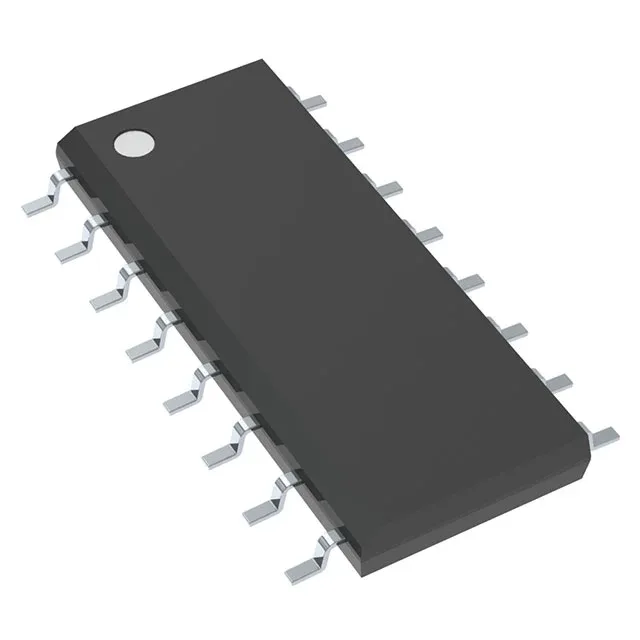
What this LVDS transceiver does on the board
It sits between a parallel bus or serialiser and a twisted-pair cable, converting single-ended CMOS/TTL signals to differential LVDS levels and back.
100 Mbps per channel is the rated switching speed, not a theoretical maximum — at this data rate the differential swing stays within the LVDS standard's 350 mV typical amplitude, keeping EMI low over a few metres of cable. The two independent driver/receiver pairs let you run bidirectional data on two separate twisted pairs (e.g., transmit and receive in a full-duplex RS-485-like topology) or use one pair for clock and one for data in a source-synchronous link. Each driver can sink or source enough current to drive a 100 Ω termination at the far end, which is the standard load for LVDS point-to-point links.